
Last updated November 20, 2026
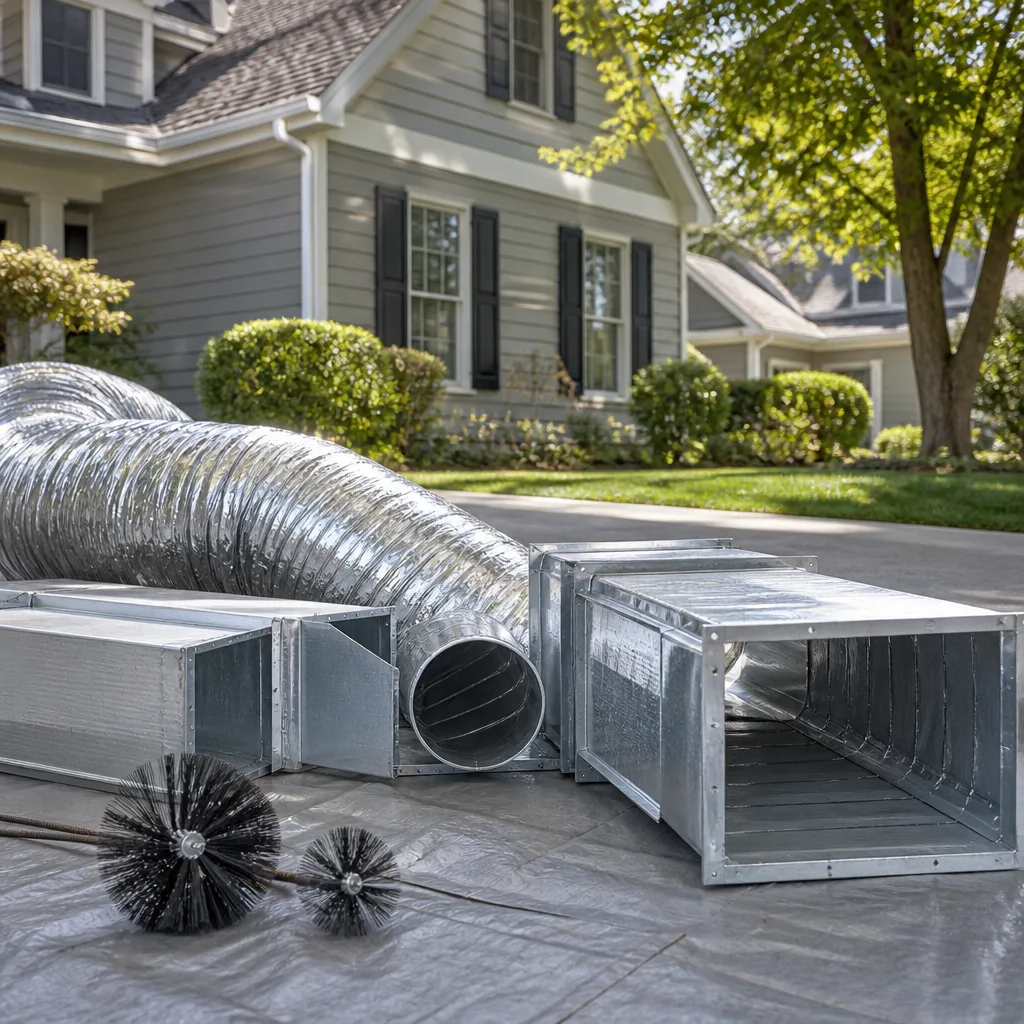 Whole-home duct cleaning
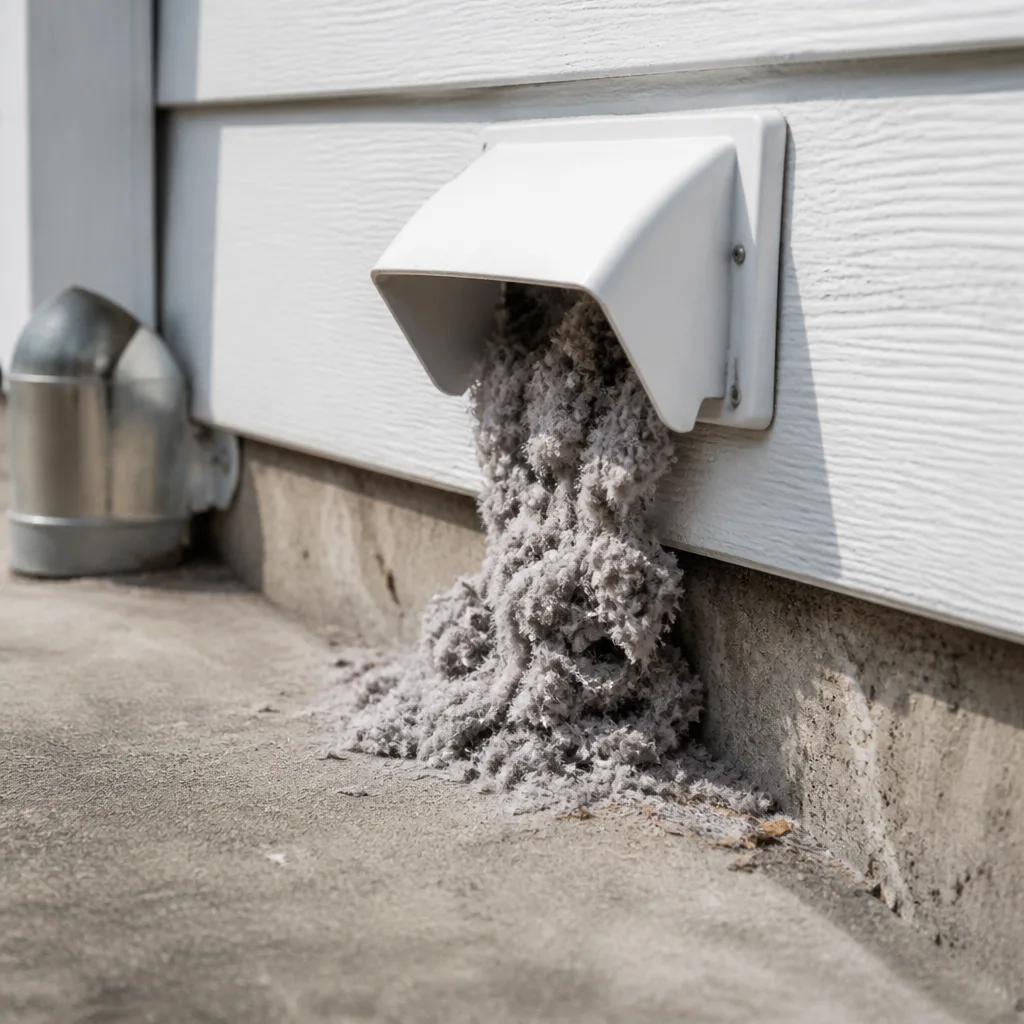 Dryer vent cleaning
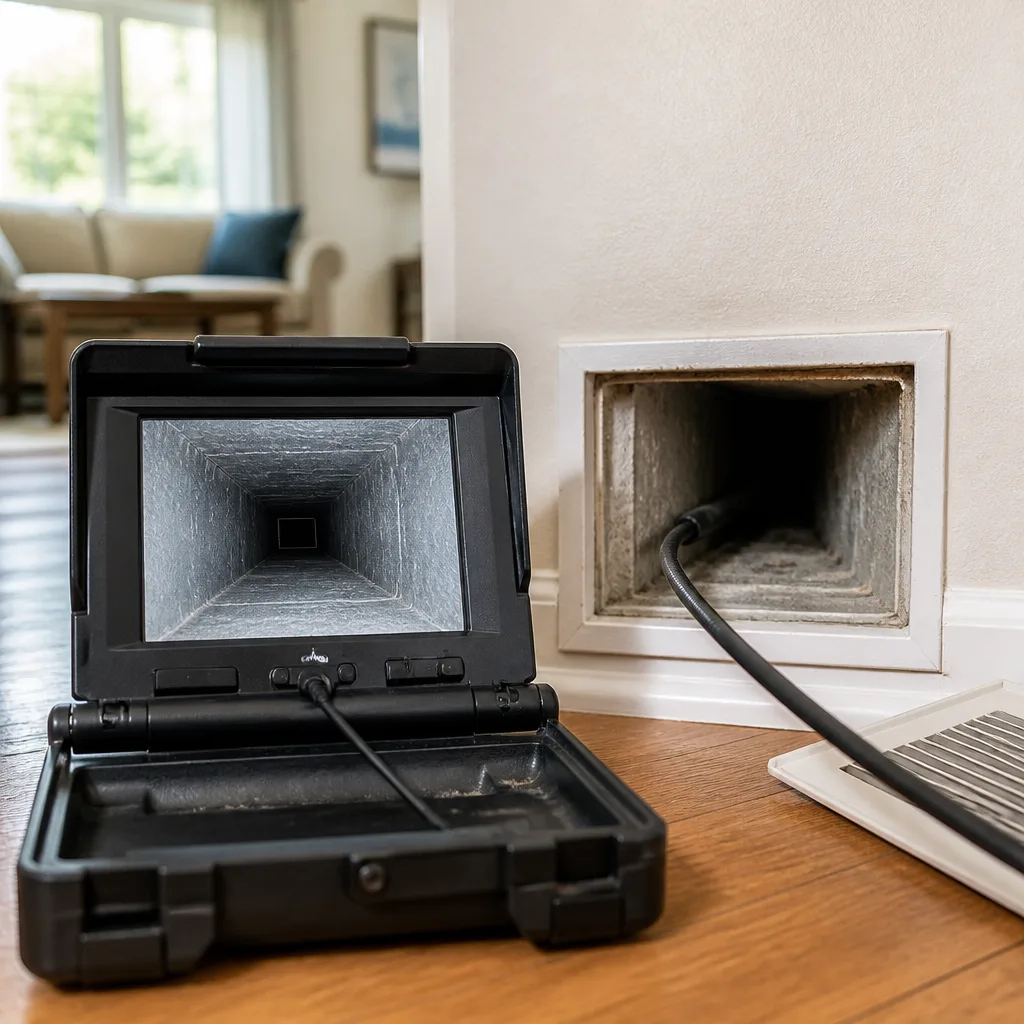 Camera inspection
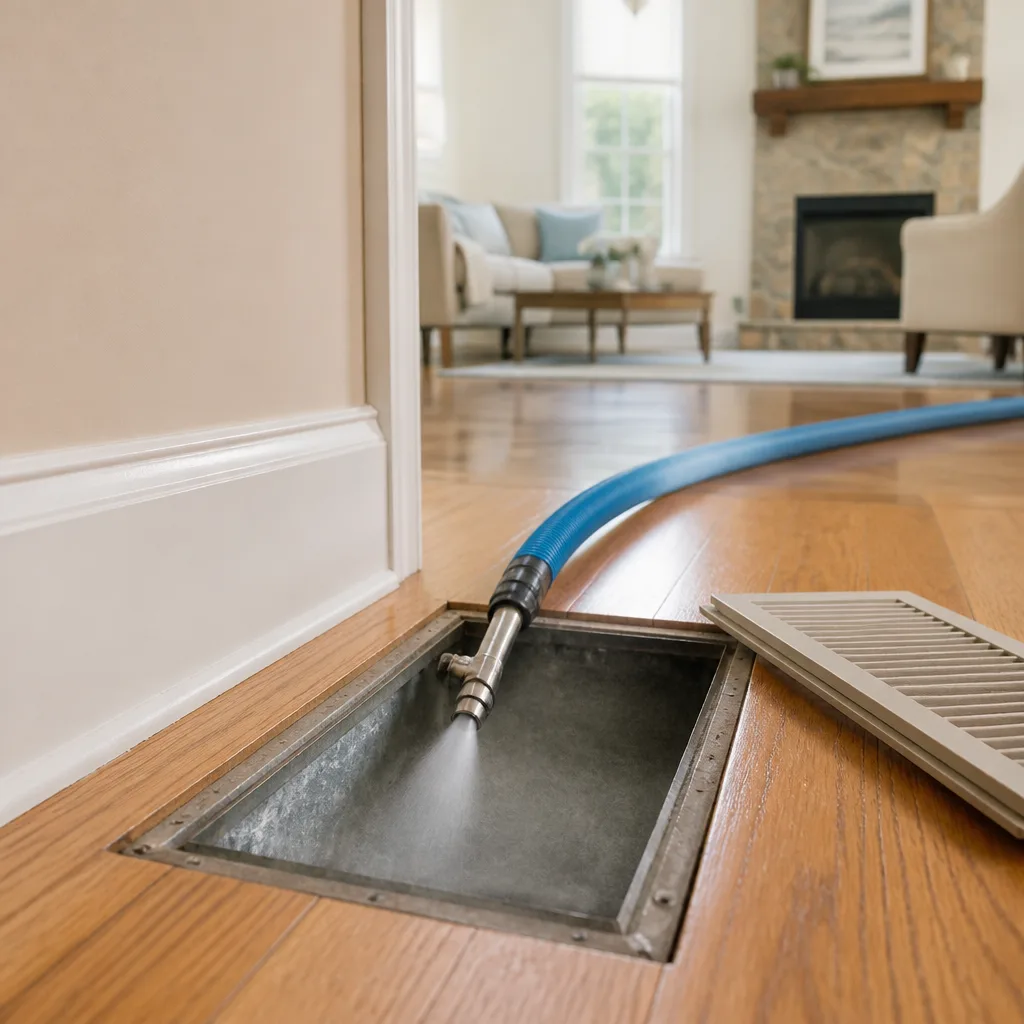 Sanitizing & deodorizing
Whole-system duct and dryer vent check with before-and-after photos - you see exactly what came out of your vents
That "$99 whole-house special" is a bait ad - the real number appears once they are in your hallway, or the "clean" is a shop-vac at the register. We photograph the inside of your ducts before and after instead.
How to Hire an Air Duct Cleaning Contractor in Flushing: A Step-by-Step Guide
Ask a duct cleaning company what brand of negative air machine they run. If the answer is a shrug, a vague “commercial-grade,” or a pitch about how the brand doesn’t matter, you’ve learned more in ten seconds than most homeowners learn before they write a check. Duct cleaning is one of the few home services where the equipment does most of the honest work, and where a confident salesman with a shop vac can bill the same as a properly equipped contractor. This guide gives you a vetting script you can read off your phone, the five equipment questions worth asking, how to read a quote line by line, and what a real post-job walkthrough looks like. We work in Flushing, and this is the conversation we wish every homeowner had before booking anyone.
Quick Answer
To hire an air duct cleaning contractor in Flushing, ask five specific equipment questions (rotary brush system, HEPA-filtered negative air machine, inspection camera, containment setup, and filtration products), verify membership in the NADCA member directory, and demand a written, line-item quote based on your actual system size and duct material. A quote given without anyone asking about your system is not a quote, it’s a guess. The right contractor names their tools and shows you before-and-after evidence of your own ducts.
Styles & brands we work with
- Whole-home duct cleaning
- Dryer vent cleaning
- Camera inspection
- Sanitizing & deodorizing
Table of Contents
- Why Flushing Homes Need a Careful Duct Hiring Process
- The Five Equipment Questions You Should Ask
- How to Read a Duct Cleaning Quote Line by Line
- NADCA Membership vs. Self-Issued Certifications
- Red Flags Specific to the Flushing Market
- What a Legitimate Post-Job Walkthrough Looks Like
- The Step-by-Step Hiring Process
- Common Mistakes to Avoid
Why Flushing Homes Need a Careful Duct Hiring Process
Flushing is a neighborhood of homes built across a wide span of decades, and that matters when you hire a duct cleaner. The housing stock includes older single-family homes with original sheet metal ductwork, postwar capes and colonials in the areas around Kissena Park and Bowne Street, and dense rows of newer construction with flexible insulated duct in the attic and crawlspace. Each of those systems takes different tools and a different approach. A rotary brush that’s perfect for rigid galvanized duct can damage flex duct if it’s run by someone who doesn’t know the difference.
Our climate adds another layer. Flushing summers are humid, and that humidity sits in basement and crawlspace ductwork for months. When ducts carry cool air through a warm, damp space, condensation forms. Dust and debris that settle on damp duct interiors can support mold growth, which is a different problem than plain dust and calls for a different level of care. A company that treats every job as a quick vacuum job doesn’t account for that.
Then there’s the market itself. Flushing attracts a lot of out-of-area operators because the density means a lot of doors to knock on. Some run discount ads with prices that don’t survive contact with the actual job. The homeowner who asks the right questions before booking saves the hassle of discovering the problem mid-visit. That’s the entire point of a hiring process: front-load the scrutiny so the job itself is boring.
What makes Flushing different from a generic suburb
Dense housing means the systems are close together but varied. Property managers here often handle multiple units and need a contractor who can document work per unit, not just hand over one invoice for a building. Allergy sufferers, families with young children, and pet owners are a big part of the customer base, and they tend to care about what’s actually in the ducts, not just the sales pitch. If you’re in any of those groups, the vetting you do before the job matters more than the price you negotiate.
The Five Equipment Questions You Should Ask
These are the five questions that separate a professional-grade duct cleaning operation from a subcontracted van job. Ask them before you book, by phone or email. A legitimate contractor answers them without hesitation, because the equipment is the part of the job they’re proud of.
- “What rotary brush system do you use?” The answer you want is a specific system, not “a brush.” Rotary brush systems agitate debris off duct walls mechanically. Consumer-grade vacuums can’t do this; they just pull loose dust. Ask if the brush is on a flexible shaft with a dedicated drive unit.
- “What negative air machine do you run, and is it HEPA-filtered?” A negative air machine creates suction at the duct opening so dislodged debris goes into the machine instead of into your room. HEPA filtration is what keeps fine particles out of your air during the service. If the answer is “we use a shop vac,” that’s the end of the conversation.
- “Do you use an inspection camera before and after?” A camera is how you verify the work was done. Without one, you’re trusting a verbal report of a process you couldn’t see.
- “What containment do you set up during cleaning?” Abatement Technologies air scrubbers and containment equipment are the kind of gear restoration contractors use, because they’re dealing with the same problem: capturing particulates before they spread. Routine duct cleaning done to that standard looks very different from a quick pass with a vacuum hose.
- “Do you supply filtration products, and which ones?” Post-cleaning filtration is where ongoing indoor air quality gets managed. Contractors who carry and install Honeywell and Aprilaire filtration products can bridge the cleaning and the maintenance. Ask which one they recommend for your system and why.
If a company can answer all five, you’re likely dealing with an operation that owns its equipment and knows how to use it. If they can answer two and hand-wave the rest, you have your answer.
How to Read a Duct Cleaning Quote Line by Line
A professional quote matches the work to your specific system. It asks how many registers and returns you have, what the duct material is, where the air handler sits, and whether there’s a dryer vent in scope. A quote given over the phone without those questions is a placeholder, not a price.
Here’s a table of line items to look for, and what each one tells you.
- System size assessment: A real quote references your register and return count. If the number isn’t there, the quote isn’t based on your home. Ask for it.
- Duct material noted: Rigid metal versus flexible insulated duct takes different tooling. A quote that doesn’t distinguish is a quote that assumes.
- Scope of work, itemized: Supply and return cleaning, air handler cleaning, and dryer vent cleaning should each appear separately if they’re part of the job. Bundled into one line with no detail, you can’t verify anything was done.
- Equipment listed: A contractor proud of their equipment names it. If the quote says “professional equipment,” ask what that means.
- Sanitizer or fogging line item: This is the one to watch. A sanitizer application offered before anyone has inspected the ducts, or added as an upsell during the visit, is a warning sign. Sanitizing has a legitimate role when there’s biological growth, but it’s a decision based on what the inspection finds, not a default line item on a quote.
- Fees itemized separately: Everything should be visible. A quote that adds charges at the end isn’t a quote.
Read the quote against the scope of the job. If the scope is thin, the price is meaningless. If the scope is detailed and the price is itemized, you can compare quotes fairly instead of comparing headlines.
NADCA Membership vs. Self-Issued Certifications
The NADCA member directory is the fastest verification you can do, and it takes under a minute. NADCA is the National Air Duct Cleaners Association, and it publishes a member directory online. Search the company name. If they’re listed, you’ve confirmed something real. If they’re not, that doesn’t make them a scam, but it does mean you need to ask harder questions.
Self-issued certifications are the problem. Anyone can print a certificate, and a “certified technician” badge on a website means nothing unless you can trace it to an issuing body. When a company says they’re certified, ask: certified by whom, and can you verify it? A legitimate certification has an organization behind it you can look up.
Other things to check
- Insurance: Ask if the contractor carries liability insurance. A licensed and insured local professional is the standard, and it protects you if something goes wrong on your property.
- Physical presence: A company that operates in Flushing should be able to tell you where they’re based and who answers the phone. An out-of-area outfit running discount ads without a local address is a red flag.
- References or recent work: Ask for examples of work similar to your home. A duct cleaner who can’t describe a recent job by system type either doesn’t do many or doesn’t pay attention to the systems.
None of this requires an investigative skill. It requires ten minutes and a phone. If you’re going to spend money on Air Duct Cleaning Flushing, spend the ten minutes first.
Red Flags Specific to the Flushing Market
We’ve seen the pattern enough to name it. A discount ad appears, quoting a number that sounds great. The truck shows up with no fixed address in Queens, often from out of the area. The technician walks in, looks at the system for two minutes, and announces that the quoted price only covered part of the job. The final invoice is several times the ad price. This is the single most common complaint we hear from homeowners who call after the fact.
The specific signals
- Out-of-area discount ads: If the ad is priced dramatically below every local competitor, ask why. Honest contractors price by the job, not by the ad.
- No Queens address: Ask where they’re based. If they can’t or won’t say, that matters.
- Quote given without system questions: If nobody asked how many registers you have, what your duct material is, or where the air handler sits, the price is fiction.
- Pressure to add services on-site: A good contractor inspects, explains what they found, and offers options. A pressure to add a sanitizer or a “deep clean” mid-visit without a camera to show you why is an upsell.
- No before-and-after evidence: “We cleaned it, trust us” isn’t evidence. Ask to see the camera footage.
- Subcontracted vans: Some companies book jobs and send a subcontractor who owns a vacuum. Ask directly: do you perform the work with your own technicians and equipment? The answer tells you who you’re actually hiring.
Flushing is a high-density market, which means a lot of companies can knock on a lot of doors in a day. The vetting script exists to protect against that specific dynamic, not to be suspicious of everyone.
What a Legitimate Post-Job Walkthrough Looks Like
A real walkthrough happens before the technician leaves, and it’s your chance to confirm the work. It should include four things.
- Before-and-after camera footage of your own ducts. Not stock photos. Your system, before and after. Ask to see the after footage in at least one supply and one return.
- Documented register count. The technician should be able to tell you how many registers and returns were cleaned, and it should match the count on your quote. This is the single easiest check against under-service.
- Written scope of work. A piece of paper that states what was done, in what rooms, with what equipment. Keep it.
- A walkthrough of the work area. Containment removed, work area clean, and a review of what was found in the ducts.
If any of these is missing, ask why. A professional will produce them. If you’re scheduling air duct cleaning for the first time, this walkthrough is also when you should ask about filtration recommendations and when the next service makes sense.
The Step-by-Step Hiring Process
Here’s the process in order. If you follow it, you’ll have a better job than 90 percent of homeowners who book on price alone.
- List your system basics before you call. Register count, return count, duct material you can see, and where the air handler is. This is the information every qualified contractor needs.
- Call or email three contractors. Ask the five equipment questions from this guide. Note who answers clearly and who deflects.
- Verify NADCA membership. Check the member directory. Cross-reference any certification claims.
- Get a written, itemized quote. Compare scope, not just totals. A lower total with a thinner scope isn’t a better deal.
- Ask what containment they’ll use. HEPA negative air and containment setup make a difference for your air during the service.
- Confirm what’s included post-cleaning. Camera evidence, register count, and written scope of work.
- Book only when the answers are clear. If any step leaves you guessing, that’s your signal to keep calling.
Flushing homeowners who run this process tend to end up with professional-grade service rather than a vacuum pass. It’s not a long process. It’s one afternoon of calls.
Common Mistakes to Avoid
- Booking on price alone. The lowest quote usually has the thinnest scope. Ask what the price includes before you compare it to anything.
- Not asking what equipment is used. Equipment is the job. If the company can’t name their system, they’re either using consumer-grade gear or don’t want you to know.
- Accepting a phone quote without system questions. A quote given without knowing your register count and duct material is a placeholder. Demand the real one in writing.
- Agreeing to a sanitizer before inspection. Sanitizing is a legitimate step when there’s biological growth. It’s an upsell when it’s added to the quote before anyone has looked.
- Skipping the NADCA check. It takes under a minute and catches the difference between a real trade association and a printed badge.
- Not watching the walkthrough. If you don’t see before-and-after footage of your own ducts, you don’t actually know what was done.
- Ignoring the dryer vent. In Flushing, dryer vents are part of the same air system and often get overlooked. If you’re having dryer vent cleaning done separately, that’s a missed opportunity to do both in one visit.
See the difference
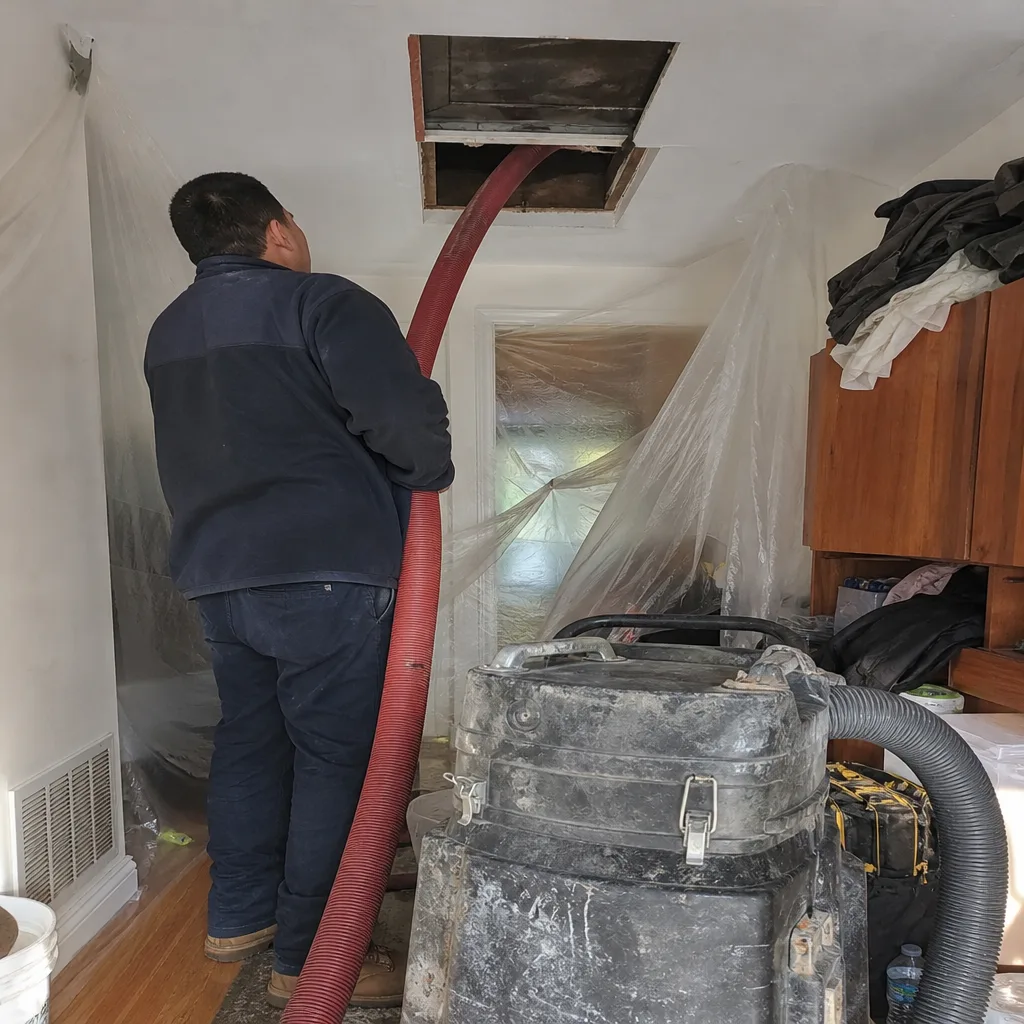
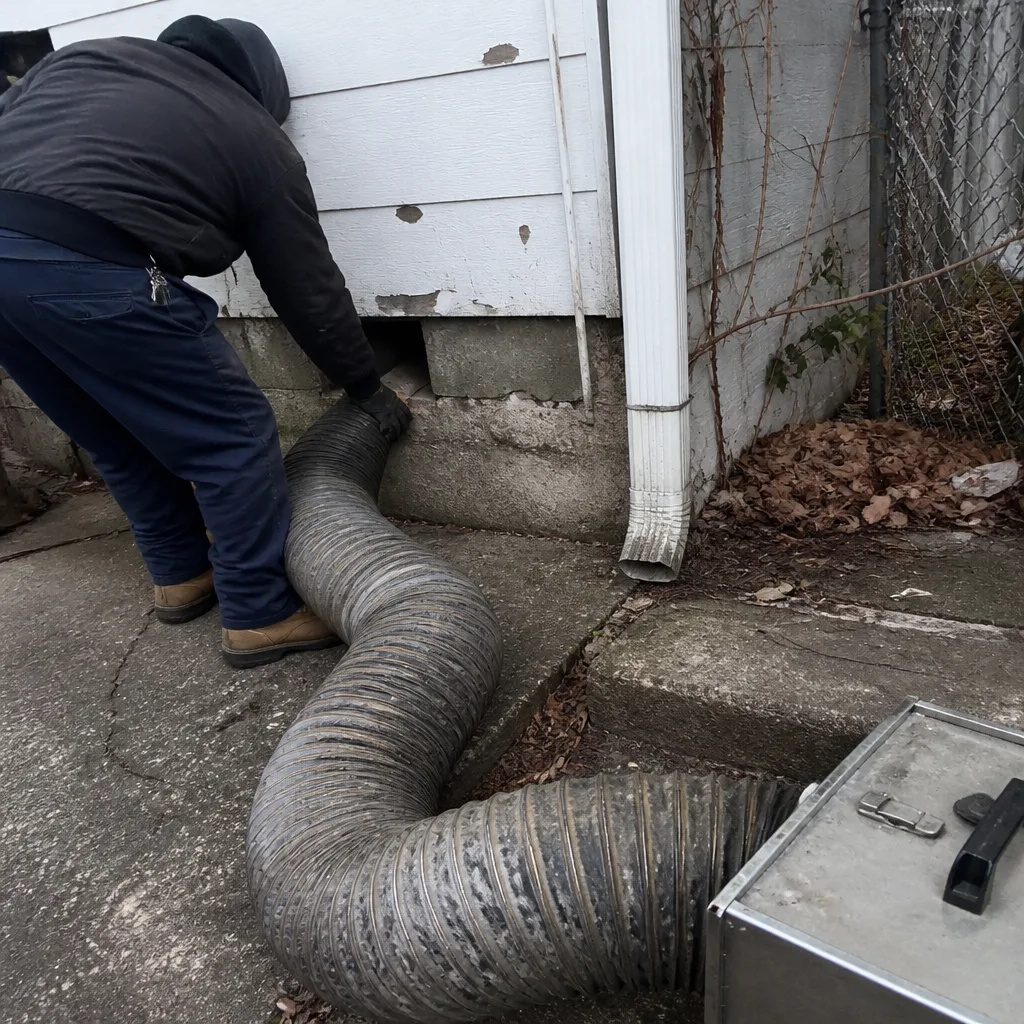 Before
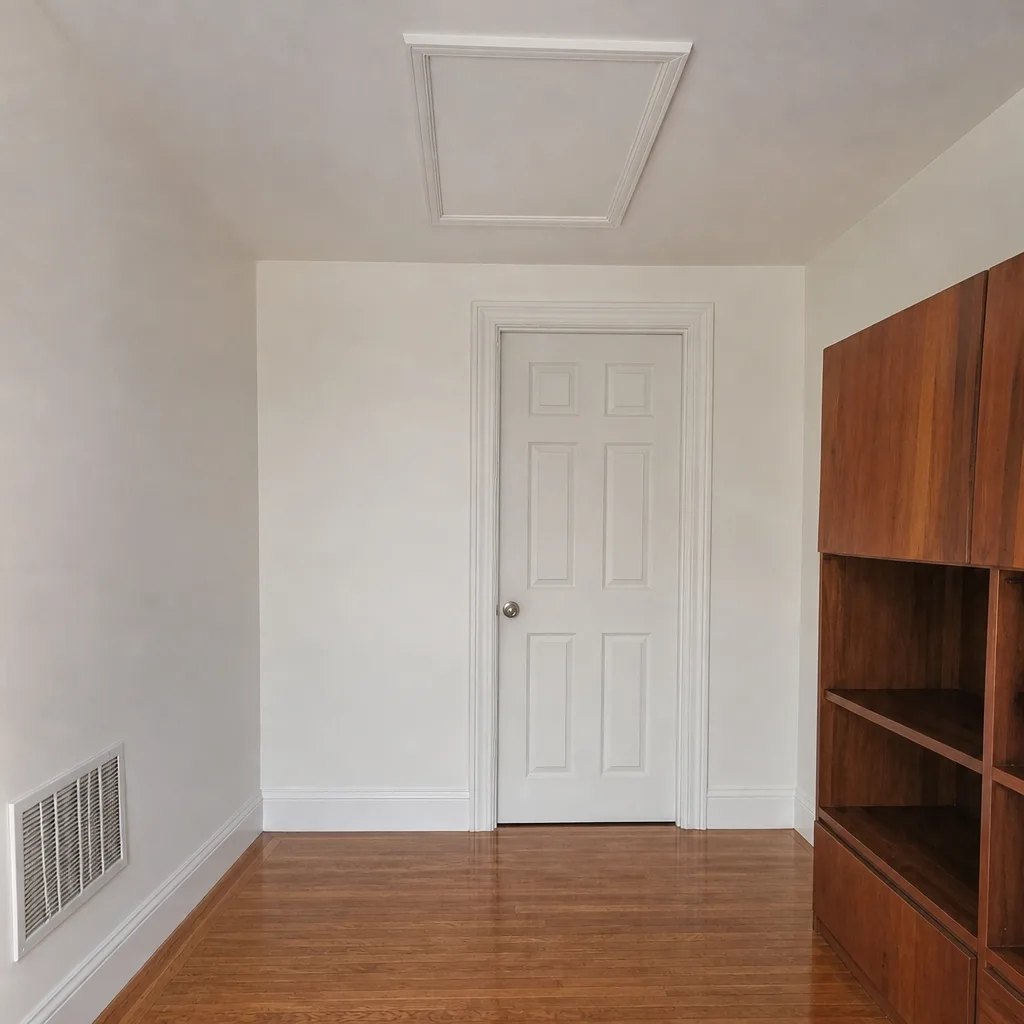
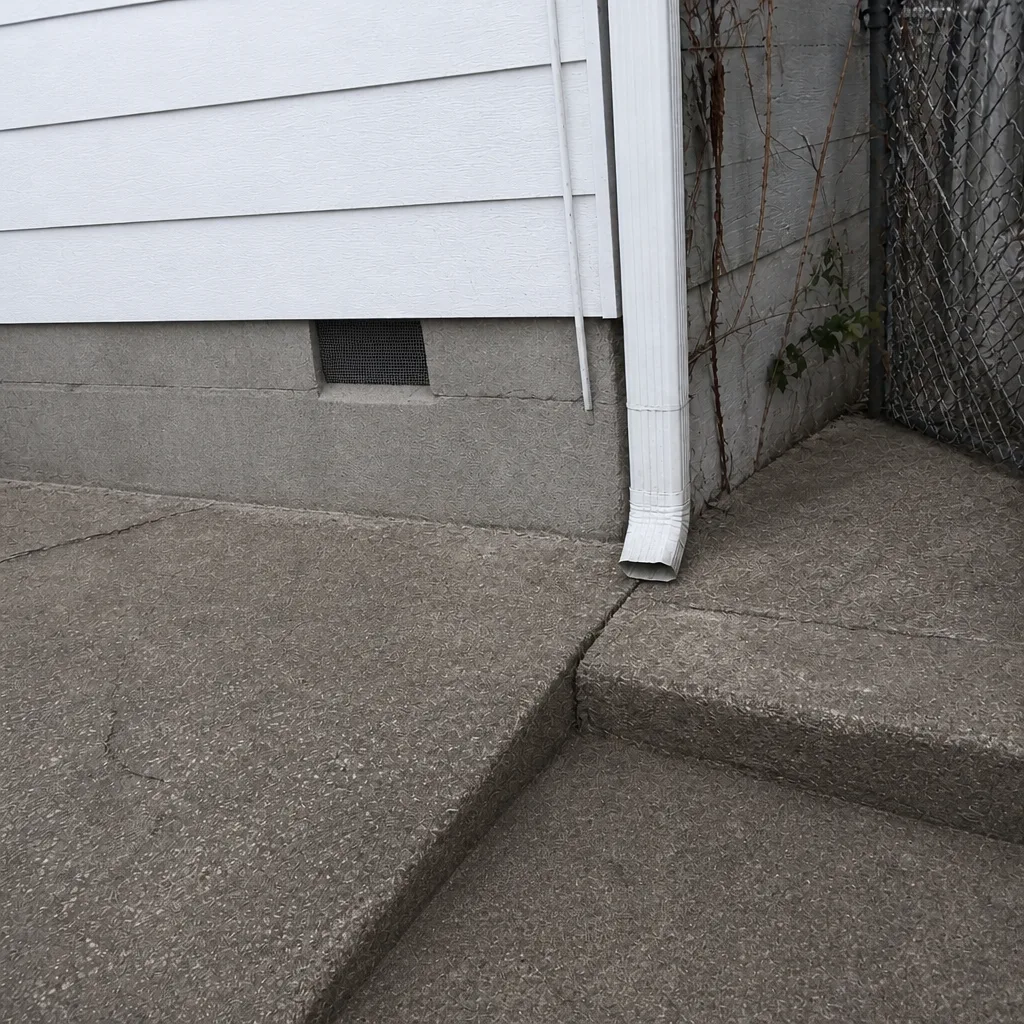 After
 Before
 After
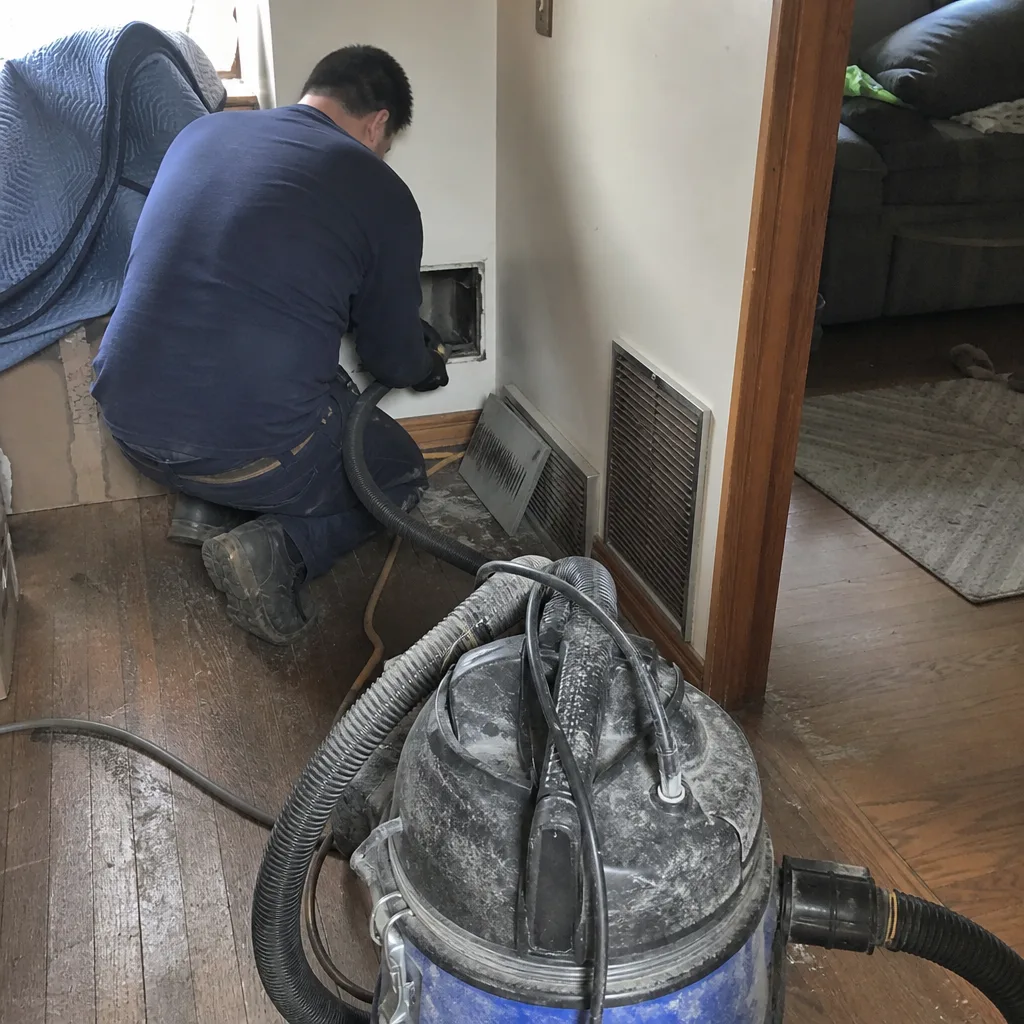 Before
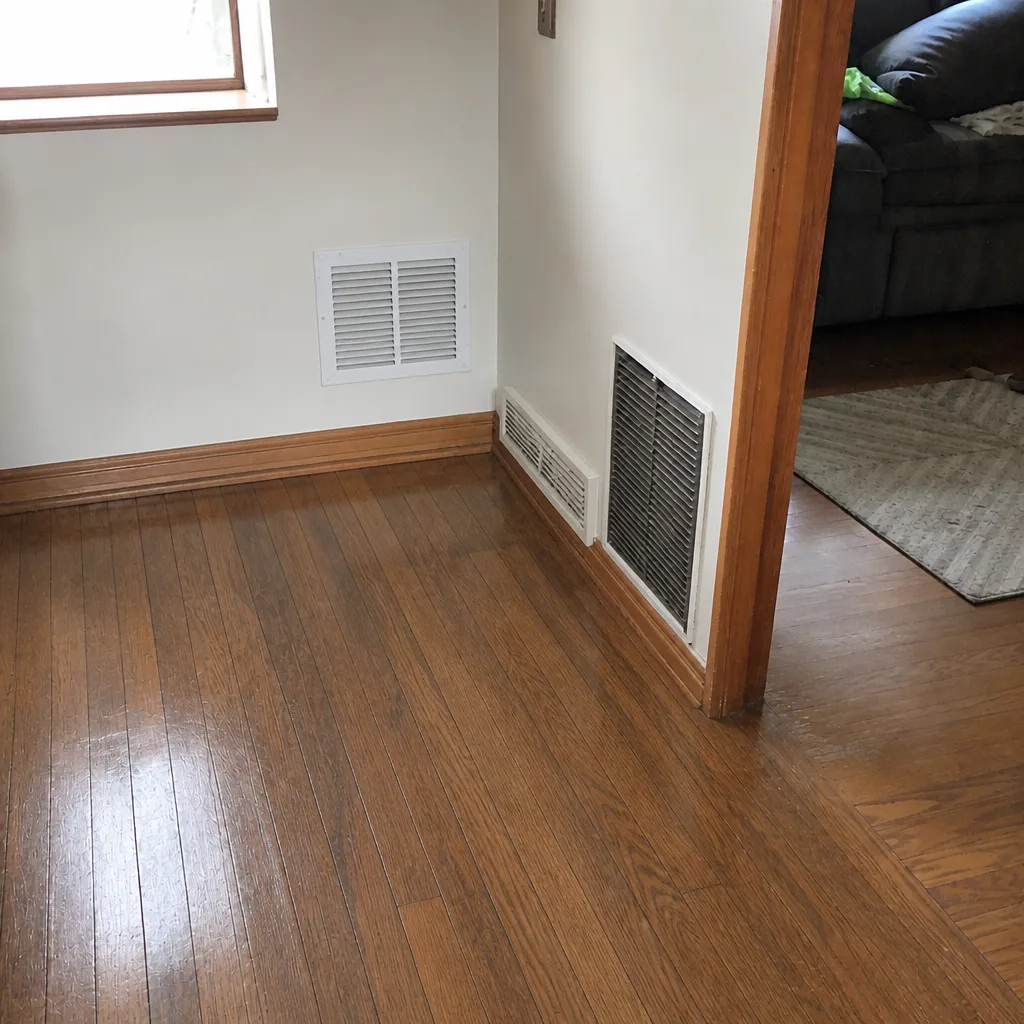 After
When to Call a Professional
Duct cleaning isn’t a routine annual chore. It’s called for when something specific has happened. Visible dust blowing from registers after the system starts, a musty odor that shows up when the heat or AC kicks on, a recent renovation that produced sawdust, water damage in the crawlspace or basement, or just moving into a Flushing home of unknown history. Homes with pets, young children, or family members with allergies tend to benefit from more frequent attention. If you’re also noticing the dryer taking longer to dry clothes, that’s a dryer vent check in the same visit.
Air Duct Cleaning Flushing offers free estimates in Flushing. We name the tools we use, including Rotobrush rotary brush systems and HEPA negative air equipment, and we show you before-and-after footage of your own ducts. Call (833) 468-5745 for a free estimate. We answer 24/7. Fast dispatch from 7am to 7pm, Sunday through Friday.
Frequently Asked Questions
Check the NADCA member directory first, then ask the five equipment questions in this guide. A legitimate contractor will name their rotary brush and negative air equipment, confirm they use an inspection camera, and produce a written quote based on your system. If any answer is vague, keep calling.
A HEPA negative air machine creates negative pressure at the duct opening and filters fine particulates out of the air, capturing them during the job. A shop vac draws loose dust but doesn’t provide HEPA filtration or the sustained negative pressure that keeps debris out of your living space. The equipment difference is the difference between a cleaning and a stirring.
Because scope differs. One quote covers your supply and returns with HEPA equipment and camera verification; another covers a vacuum pass on the visible parts. The price difference usually tracks the equipment and the documentation, not the quality of the sales call. Ask for itemized scope, then compare.
Only if the inspection finds biological growth. A sanitizer application offered before the job is assessed, or added during the visit without camera evidence, is an upsell. Sanitizing has a legitimate role in specific situations, and a good contractor tells you which situation applies to your home.
There’s no fixed schedule. Most homes go several years between cleanings, and the honest trigger is a condition, not a calendar: visible dust at registers, musty odors, recent renovation, water intrusion, or a move to a new home. If your ducts have never been assessed, that’s the call to make.
Call (833) 468-5745. We answer 24/7, and a call outside dispatch hours is booked into the next opening, Sunday through Friday, 7am to 7pm. The estimate is free and the price is set per job by the written estimate.
The Bottom Line
Hiring a duct cleaner in Flushing comes down to a short conversation about equipment. If they can name their rotary brush system, their negative air machine, and their inspection camera, they’re in a different category from a company that can only talk about price. Verify NADCA membership in under a minute, demand a written quote based on your actual system, and watch the walkthrough yourself. The cost of doing this right is one afternoon. The cost of skipping it is paying for a service without evidence it happened. If you want that process with equipment named up front, including HVAC cleaning under the same visit, call us at (833) 468-5745 for a free estimate. Our technicians have up to 12 years of experience.
Written by the team at Air Duct Cleaning Flushing.