
Last updated November 20, 2026
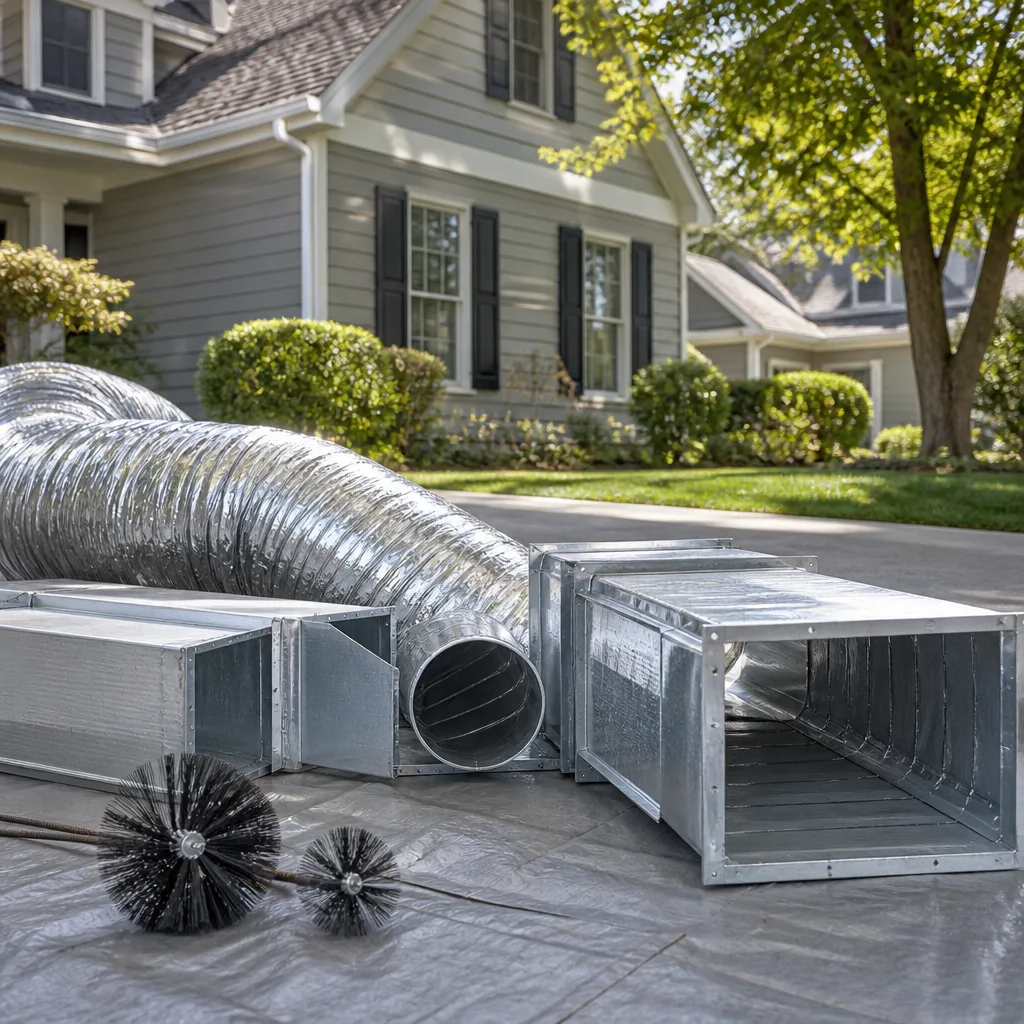 Whole-home duct cleaning
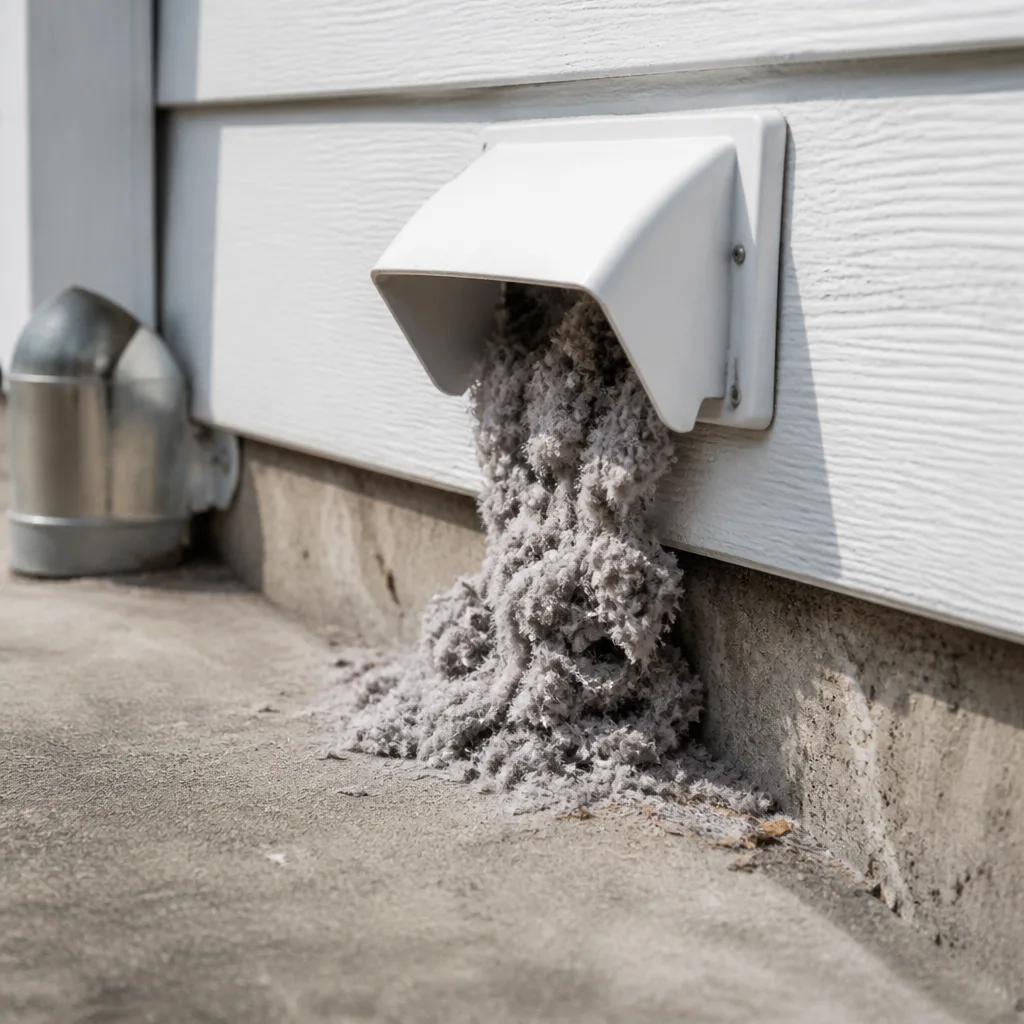 Dryer vent cleaning
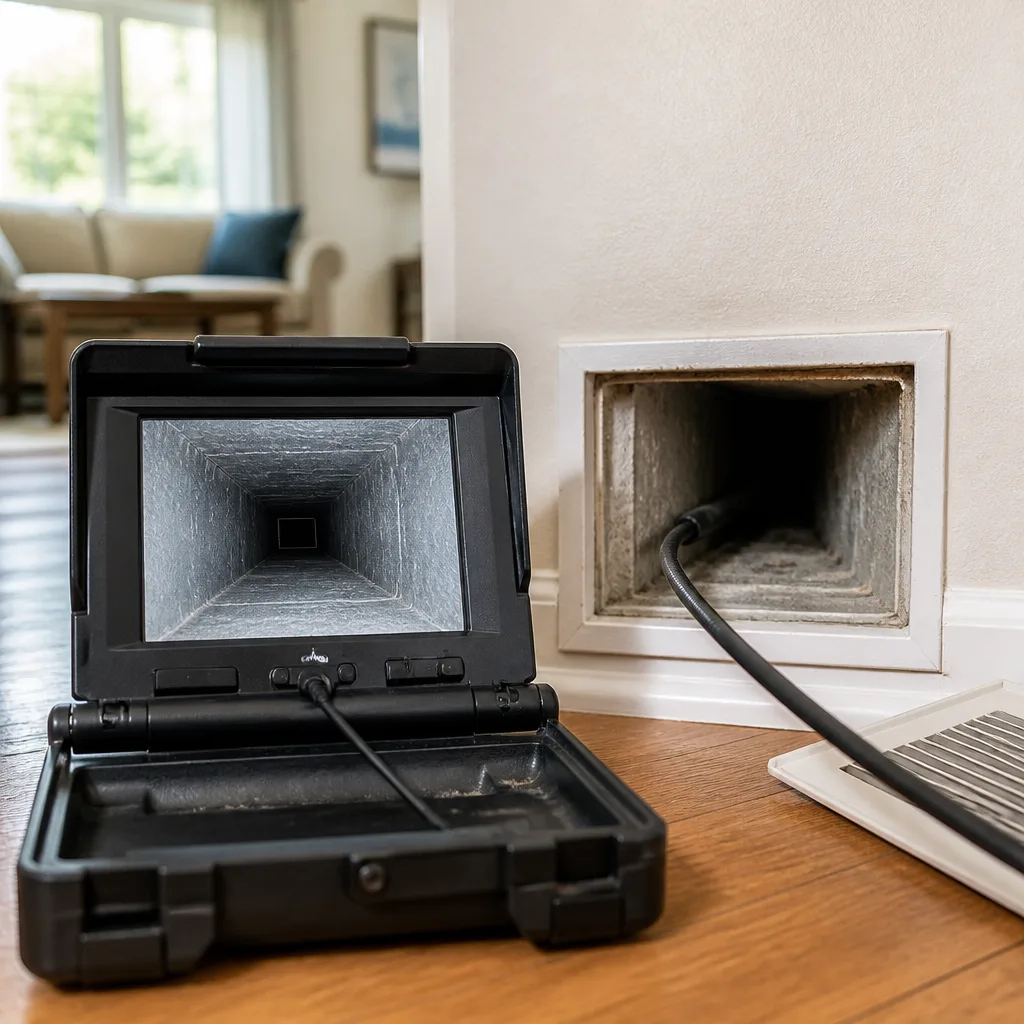 Camera inspection
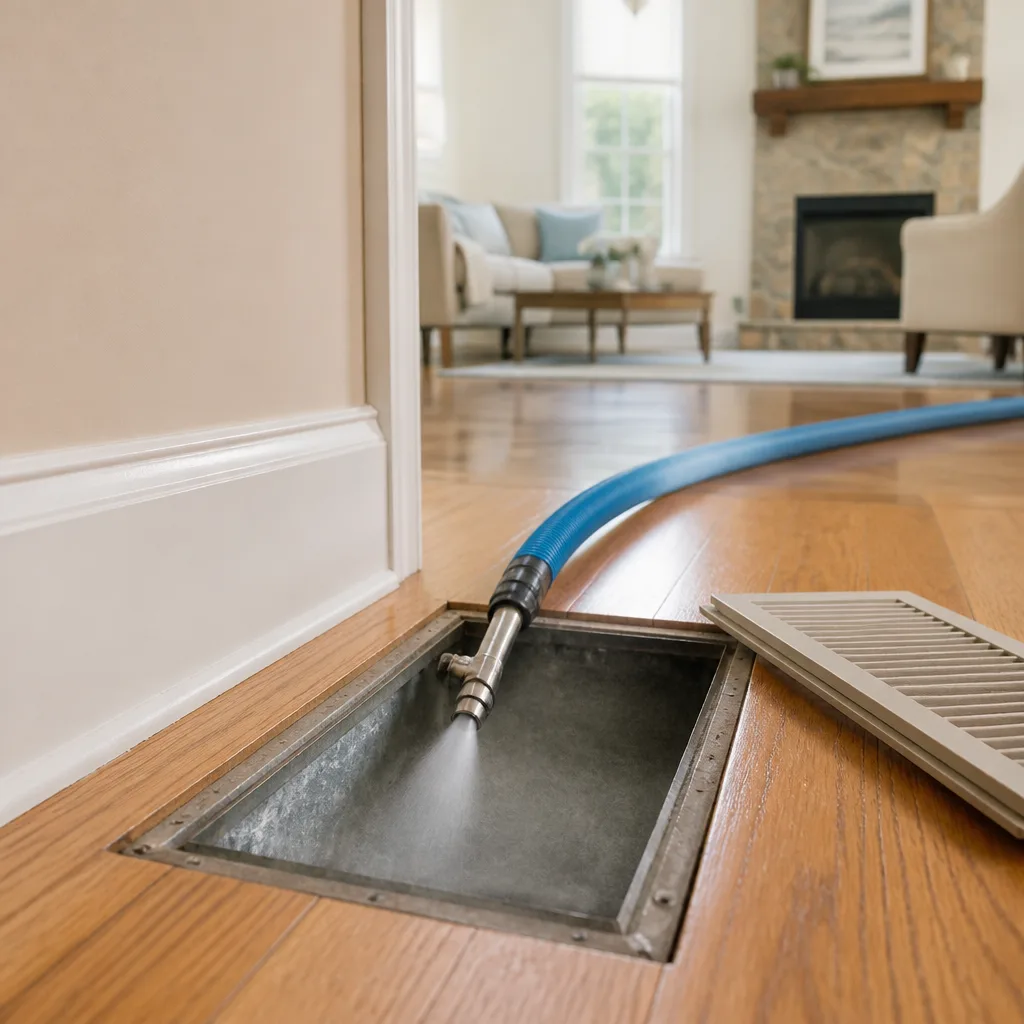 Sanitizing & deodorizing
Whole-system duct and dryer vent check with before-and-after photos - you see exactly what came out of your vents
That "$99 whole-house special" is a bait ad - the real number appears once they are in your hallway, or the "clean" is a shop-vac at the register. We photograph the inside of your ducts before and after instead.
Air Duct Cleaning Permits, Codes & Inspections in Flushing, NY: What You Need to Know
You might expect the rules around duct cleaning to be written down somewhere with the word “duct” in them. They aren’t. Local Law 97 and the DOB filing system never mention residential duct cleaning by name, and that silence is exactly where trouble starts. Some contractors treat the gap as permission to skip steps they’re still legally required to take, and homeowners pay for it later. This guide maps the real NYC framework for Flushing: where cleaning ends and alteration work begins, how asbestos in pre-1980 duct insulation changes everything, and what a co-op board can actually demand before anyone touches a shared system.
Quick Answer
Air duct cleaning itself does not require a permit in New York City, but the work crosses into regulated territory the moment ductwork connected to a gas appliance is opened, modified, or its asbestos-containing insulation disturbed. Ordinary cleaning by a competent contractor needs no DOB filing. Any alteration to the system, any work breaking into a furnace plenum, and any disturbance of pre-1980 duct insulation brings in licensed contractor requirements, asbestos assessment, and in some cases board or managing agent approval before the job starts.
Styles & brands we work with
- Whole-home duct cleaning
- Dryer vent cleaning
- Camera inspection
- Sanitizing & deodorizing
Table of Contents
- Does air duct cleaning need a permit in Flushing?
- Where cleaning becomes “alteration work” under NYC DOB rules
- Asbestos in pre-1980 Flushing housing stock: the ACP-5 process
- Con Edison, gas appliances, and the MEP licensed contractor question
- NYC DOHMH indoor air quality guidelines and verification
- What a co-op or condo board can and cannot require
- What a post-cleaning inspection should actually check
- Permit and code red flags in Flushing duct cleaning quotes
Does air duct cleaning need a permit in Flushing?
No. Air duct cleaning is maintenance, not construction, and the NYC Department of Buildings does not issue permits for cleaning ductwork in a one- to four-family home or an apartment. You will not find a “duct cleaning permit” application at the DOB, and any contractor who tells you they’ve pulled one for routine cleaning is either confused or telling you something to sound official.
What matters is where the job stops being cleaning. The NYC Mechanical Code governs the installation and alteration of HVAC systems, and the DOB’s filing rules under the city’s construction codes treat changes to a system’s configuration as work that may require a licensed contractor and, depending on scope, a filed application. Cleaning removes accumulated dust, debris, and microbial growth from the interior surfaces of ducts that stay where they are. Alteration changes the system: cutting in new runs, relocating a register, resizing a trunk line, replacing flex duct with rigid, or modifying the furnace plenum where the duct system meets the equipment.
Flushing’s housing stock makes this distinction come up more often than you’d think. A large share of the neighborhood’s homes and low-rise apartment buildings date to the postwar decades, and plenty of them have had duct systems patched, extended, or rerouted by previous owners without documentation. When a technician opens a duct in a Flushing house and finds a run that doesn’t match the original layout, the conversation shifts from cleaning to what’s actually there. That’s not a reason to panic. It is a reason to ask the contractor, before work begins, how they’ll handle a discovery like that.
A practical rule: if the scope is “clean what’s already installed,” you don’t need a permit. If the scope includes words like “replace,” “relocate,” “extend,” or “modify,” ask who is licensed to do that portion of the work and whether a filing is required. Professional-grade equipment matters here too. A contractor running air duct cleaning in Flushing with proper rotary brush systems and negative-pressure containment can clean a complicated old duct layout without needing to alter it.
Where cleaning becomes “alteration work” under NYC DOB rules
The DOB cares about alterations because alterations affect the performance and safety of a building system. Cleaning does not change the system. Here’s how to tell which side of the line a job sits on.
Jobs that are pure cleaning, no filing needed
- Removing dust, debris, and buildup from supply and return ducts that stay in place
- Cleaning registers, grilles, and diffusers without changing their size or location
- Cleaning the air handler cabinet, blower, and evaporator coil surfaces
- Cleaning dryer vent runs from the dryer connection to the exterior termination
- Applying protective coatings to duct interiors after cleaning, using products designed for that purpose
Jobs that cross into alteration or repair territory
- Cutting new duct runs or adding registers to serve a room that had none
- Relocating a trunk line, register, or return-air opening
- Changing duct sizing to correct airflow problems
- Replacing sections of flex duct with rigid duct, or vice versa
- Opening or modifying the furnace plenum in a way that changes the system’s configuration
- Any change that affects how combustion air is supplied to a fuel-burning appliance
The last item on that second list is the one that catches people. A plenum is the box where the duct system connects to the furnace or air handler. Cleaning the interior of a plenum is routine. Cutting into it to add a takeoff, or rearranging the connections inside it, changes how the furnace moves air and, in a gas system, can affect combustion air. That’s mechanical alteration, and it calls for a contractor licensed to perform that class of work.
In Flushing, this distinction comes up most often in two settings: older two-family homes where a basement furnace has been retrofitted over the years, and mid-century apartment buildings where individual units have been renovated with duct changes never documented anywhere. If you’re a property manager, get the scope in writing before you approve a job. If you’re a homeowner, ask the contractor directly: “Is any part of this work an alteration, or is it all cleaning?” A straight answer tells you a lot about the company.
Asbestos in pre-1980 Flushing housing stock: the ACP-5 process
This is the part that deserves the most attention, because it’s where a routine cleaning job can turn into an Environmental Control Board violation. Much of Flushing’s residential building stock went up before 1980, and duct systems from that era were frequently wrapped or lined with insulation materials that can contain asbestos. It might be paper-faced wrap on the exterior of a duct run, a sprayed-on coating inside a plenum, or joint tape and sealant. It doesn’t look dangerous. That’s the problem.
New York City’s asbestos rules are strict about disturbance. Before work that will disturb suspect asbestos-containing material, the city requires an asbestos assessment, and the document that certifies a building has been inspected and found to contain no asbestos in the area of work is commonly called an ACP-5. When suspect material is present, the project shifts into abatement territory, handled by a licensed asbestos contractor under separate rules.
The practical sequence for an older Flushing building looks like this:
- Confirm the building’s age. Pre-1980 construction means suspect materials should be assumed until an inspection says otherwise.
- Have the duct insulation assessed before cleaning. This is a separate inspection from the cleaning itself, done by a qualified asbestos investigator.
- Get the clearance document. If the assessment finds no asbestos in the work area, the ACP-5 documents that finding.
- If asbestos is found, stop. Disturbing it without proper abatement is an Environmental Control Board violation, and the penalties fall on whoever caused the disturbance.
- Only then schedule the cleaning. Bring the assessment paperwork to the contractor, not the other way around.
Here’s what we’ve observed in our experience around Queens: some low-price duct cleaning outfits never ask when your building was constructed. That’s not a shortcut worth taking. If a company quotes you a price for duct cleaning in a pre-1980 Flushing home without mentioning the age of the building or asking about insulation, that’s a signal about how carefully they work. A contractor running Abatement Technologies air scrubbers and proper containment understands the difference between dust and suspect material, because the equipment exists precisely to capture what gets dislodged.
One more note on timing: the assessment takes time, and it isn’t something a cleaning crew can do on arrival. Plan for it before you book the job, not after.
Con Edison, gas appliances, and the MEP licensed contractor question
Most Flushing homes and apartment buildings heat with gas, and that changes the rules around ductwork connected to the heating system. The duct system and the furnace share a plenum, and the furnace consumes combustion air from the space around it. Any work that affects the enclosure, the plenum, or the airflow through the system has the potential to affect how that appliance burns.
Two categories matter here:
- Cleaning that leaves the system configuration untouched – vacuuming the plenum interior, brushing the ducts, cleaning the blower and coil – is maintenance and does not require an MEP licensed contractor. It does require a technician who knows not to disturb gas piping, flue connections, or the burner assembly while they work.
- Any modification to the plenum, flue connections, gas piping, or combustion air supply requires a licensed master plumber or a contractor licensed for that class of mechanical work, and any gas piping change requires coordination with Con Edison’s requirements for gas service work.
In practice, the questions a Flushing homeowner should ask before a duct cleaning are simple. Will the technician need to disconnect or move any gas piping? Will they be opening the plenum, and if so, why? If the answer to either is yes, ask who is licensed to do that portion of the work. A cleaning contractor who knows the boundary will tell you clearly which parts of the job they’ll handle and which parts call for a different license. One who waves the question away is telling you something.
Full HVAC cleaning is where this comes up most. Cleaning the air handler and coil is routine and valuable. Opening the combustion section or altering the flue is a different kind of job entirely. The two shouldn’t get blurred in a quote.
NYC DOHMH indoor air quality guidelines and verification
The NYC Department of Health and Mental Hygiene publishes indoor air quality guidance for homes and buildings, and while it doesn’t mandate post-cleaning inspections for routine residential duct cleaning, its framework is useful for understanding when verification makes sense. The Department’s guidance focuses on source control, ventilation, and moisture management. Duct cleaning addresses all three when it’s done thoroughly.
Post-remediation verification, or PRV, is a term from the mold remediation world. It describes an independent inspection and, commonly, air or surface sampling to confirm that remediation has achieved its goal. For duct cleaning, a formal PRV isn’t required in a typical home. But there are situations where it’s worth considering even when no one is mandating it:
- Documented mold growth inside the duct system. If a prior inspection found visible growth, verify it’s gone.
- Water damage history. A flooded basement, a roof leak that reached the ducts, or a persistently damp crawlspace can leave residual conditions that warrant checking.
- Health concerns in the household. Allergy sufferers, young children, or anyone with respiratory sensitivity may want independent confirmation that the work achieved what was promised.
- Property management and liability. A building owner or manager may require verification documentation before closing out a work order, especially in a multi-unit building.
- Disputes with a prior contractor. If a previous cleaning left questions, independent verification settles them.
The DOHMH guidance doesn’t name brands or prescribe equipment, but the principle behind it – that you can’t manage what you don’t measure – points to the same conclusion. A contractor who documents the before and after with photos and can explain what was removed is giving you something you can verify. Rotobrush rotary brush systems and Nikro extraction rigs are designed for that kind of accountability, because the equipment produces a visible result rather than a vague claim. We name the tools we use because transparency is part of the job.
What a co-op or condo board can and cannot require
Flushing has a substantial co-op and condo population, and boards and managing agents routinely impose requirements on work inside apartments. The question is where the board’s authority ends and yours begins. In general, a board can set rules that protect the building’s common systems and the quiet enjoyment of other residents. It cannot invent licensing requirements or permit demands that the city doesn’t impose.
What a board can reasonably require
- Advance notice and a scheduled work window so the building knows when contractors will be present
- Certificate of insurance from the contractor, naming the building or co-op as additional insured, in whatever amounts the building’s own coverage requires
- Proof of workers’ compensation coverage for anyone working in the building
- Protection of common areas during the work, including floor and elevator protection and cleanup after
- Containment and negative-pressure protocols where the work could spread dust into shared spaces
- A restriction on work during certain hours to protect residents
- Documentation of what was done, especially if a shared riser or common duct is involved
What a board cannot do
- Require a DOB permit for work the DOB doesn’t permit, such as routine duct cleaning inside a unit
- Insist on a specific contractor brand or insist you use the building’s vendor for in-unit work, unless a proprietary building system genuinely requires it
- Demand asbestos documentation for a building constructed after 1980 in the absence of any other trigger
- Approve a scope of work that skips required steps just because the board prefers a lower price
The most common friction point in Flushing involves shared ductwork in older buildings. If a duct serves more than one unit, the building may own the duct, and the board has a legitimate interest in how it’s cleaned. In that situation, ask your managing agent for the building’s written alteration agreement before booking anything. Also worth knowing: if the building was constructed before 1980 and the ducts share a chase or riser with suspect insulation, the board’s own asbestos records may already contain the answer you need. In our experience, boards that keep good records are also the fastest to approve work, because the questions are already answered.
What a post-cleaning inspection should actually check
Inspection isn’t a formality. It’s the step that separates a real cleaning from a vacuum pass. Here’s what a proper post-cleaning check should cover, whether it’s done by you or by someone independent.
- Visible interior surfaces. Look inside several registers with a flashlight. You should see clean metal or clean duct liner, not loose dust clinging to the walls.
- The plenum and air handler. The cabinet interior, blower wheel, and coil surfaces should be visibly clean. This is often where shortcuts happen, because it’s harder to reach than a register.
- Flex duct condition. Old flex duct that’s been crushed or torn during cleaning should be called out and repaired or replaced, not left in place.
- Register and grille reinstallation. Every grille back in place, correctly seated, and airflow restored.
- Drain pan and condensate line. Clear and flowing, with no standing water left behind in the air handler.
- Filtration. A fresh filter of the right size and rating installed, or the existing one confirmed clean.
- Documentation. Before and after photos of the ducts, the air handler, and the dryer vent if it was cleaned. Ask for them if they aren’t offered.
If your home uses a whole-house filter, this is also the point to discuss whether a Honeywell or Aprilaire filtration unit makes sense. Cleaning removes what’s there. Filtration keeps it from coming back at the same rate. A contractor who can supply and install the filtration system along with the cleaning is in a position to solve the problem rather than just address the symptom.
If the post-cleaning check reveals that part of the ductwork is deteriorated beyond cleaning – crushed flex, disconnected joints, water damage – that’s where cleaning stops and repair begins, and the alteration rules come into play. A contractor who tells you this upfront is doing you a favor.
Permit and code red flags in Flushing duct cleaning quotes
A quote that sidesteps the regulatory questions is a warning sign, not a convenience. Here’s what to watch for.
- “We handle the whole job, no questions asked.” A contractor who never asks when your building was constructed, whether the ducts share a plenum with a gas furnace, or whether you live in a co-op is skipping steps they should be taking.
- A flat per-vent price that doesn’t change. Cleaning a complicated old duct system in a pre-1980 Flushing home isn’t the same as a simple newer install. A quote should reflect the actual scope, not a per-vent multiplier.
- No mention of Asbestos abatement or the ACP-5 process in a pre-1980 building. If the building is old and the contractor doesn’t raise the question, ask them.
- No equipment questions asked of you and no equipment named in the quote. Ask what equipment they’re bringing. A shop vac and a promise is not duct cleaning.
- Pressure to book before you can read the scope in writing. The written estimate sets the final price. If there isn’t one, there’s no price.
- A co-op board approval skipped or waved off. In a shared building, board approval isn’t a suggestion. Skipping it can put your apartment and the common areas at risk.
- No documentation offered. Ask upfront how the work will be documented and whether you’ll get before and after photos.
Common Mistakes to Avoid
- Assuming the 1980 rule doesn’t apply. Plenty of Flushing homes were renovated in the 1980s but built decades earlier. The original construction date is what counts for suspect materials, not the last renovation. Check before booking.
- Approving work without a written scope. The written estimate sets the final price. If a contractor won’t put the scope in writing – what they’ll clean, how they’ll contain it, what equipment they’ll use – find another contractor.
- Skipping the board conversation in a co-op or condo. In Flushing’s co-op and condo buildings, in-unit duct work often requires notice and proof of insurance. Doing it without approval risks fines and interruption.
- Treating a per-vent price as a real quote. Per-vent pricing tells you nothing about what the job will actually cost. Ask for a whole-system estimate in writing, and ask why the number is what it is.
- Touching the plenum without knowing the line. Cleaning the plenum interior is routine. Cutting into it to modify the system is a licensed job. Confusing the two is the most common source of trouble in gas-heated Flushing homes.
- Ignoring old flex duct. Flex duct that’s crushed, torn, or disconnected won’t be fixed by cleaning. It needs replacement, and replacing it makes the job an alteration rather than a cleaning.
- Not asking for before and after photos. A cleaning contractor who can’t show you what was cleaned before and after doesn’t have much to show. Ask for it.
See the difference
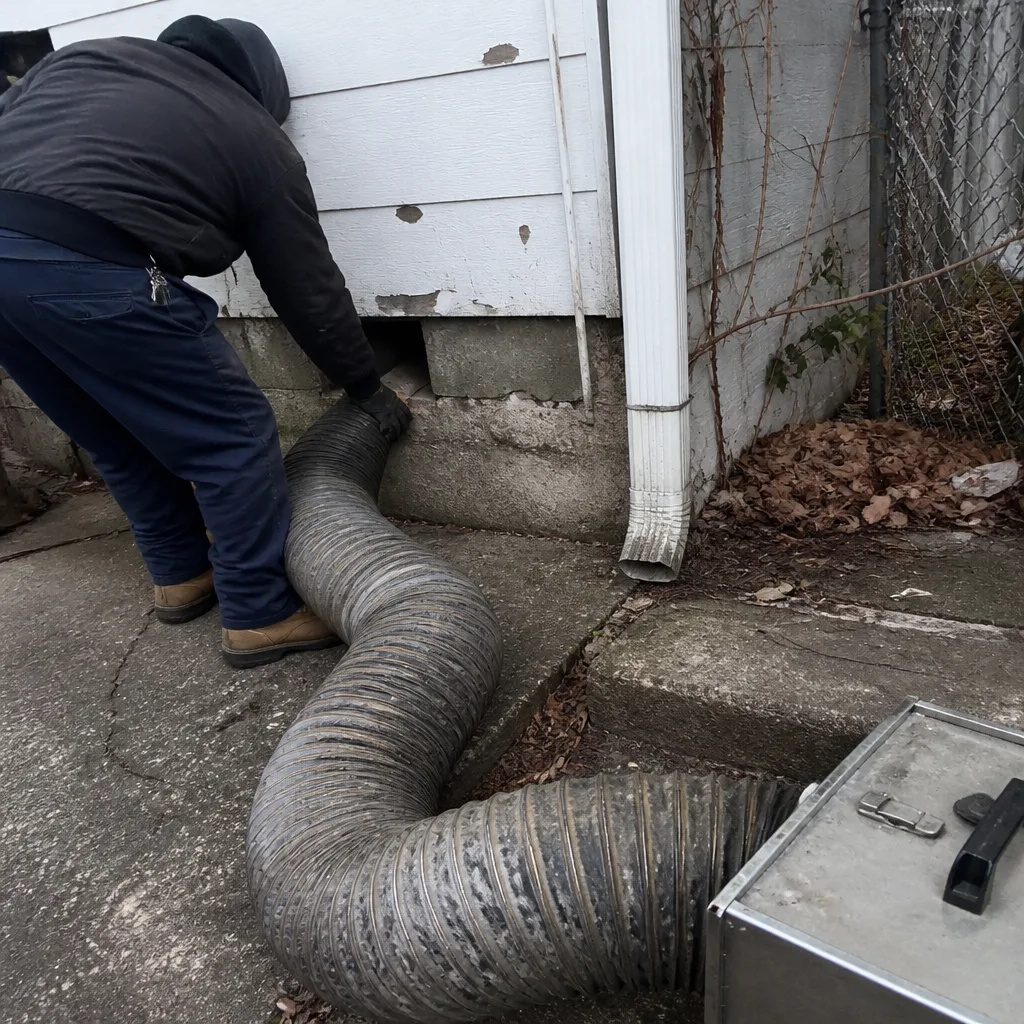 Before
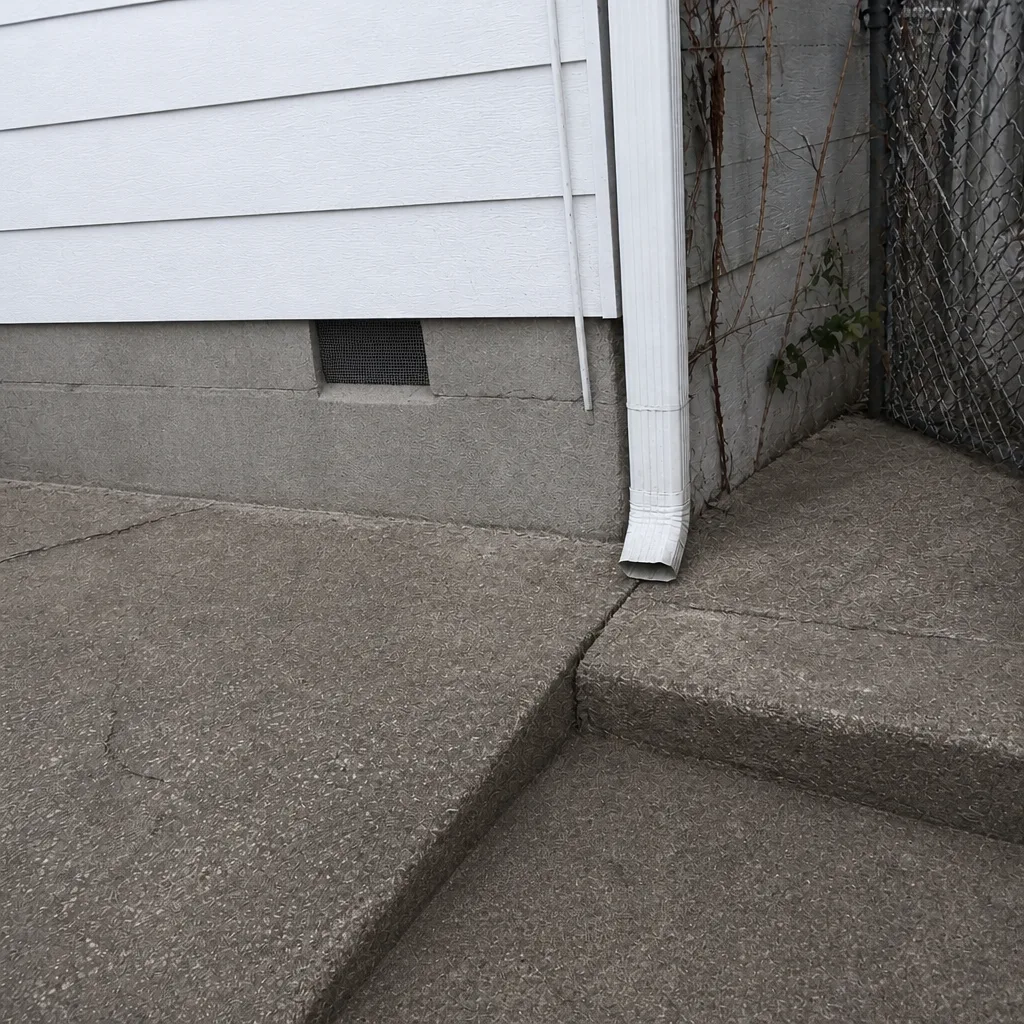 After
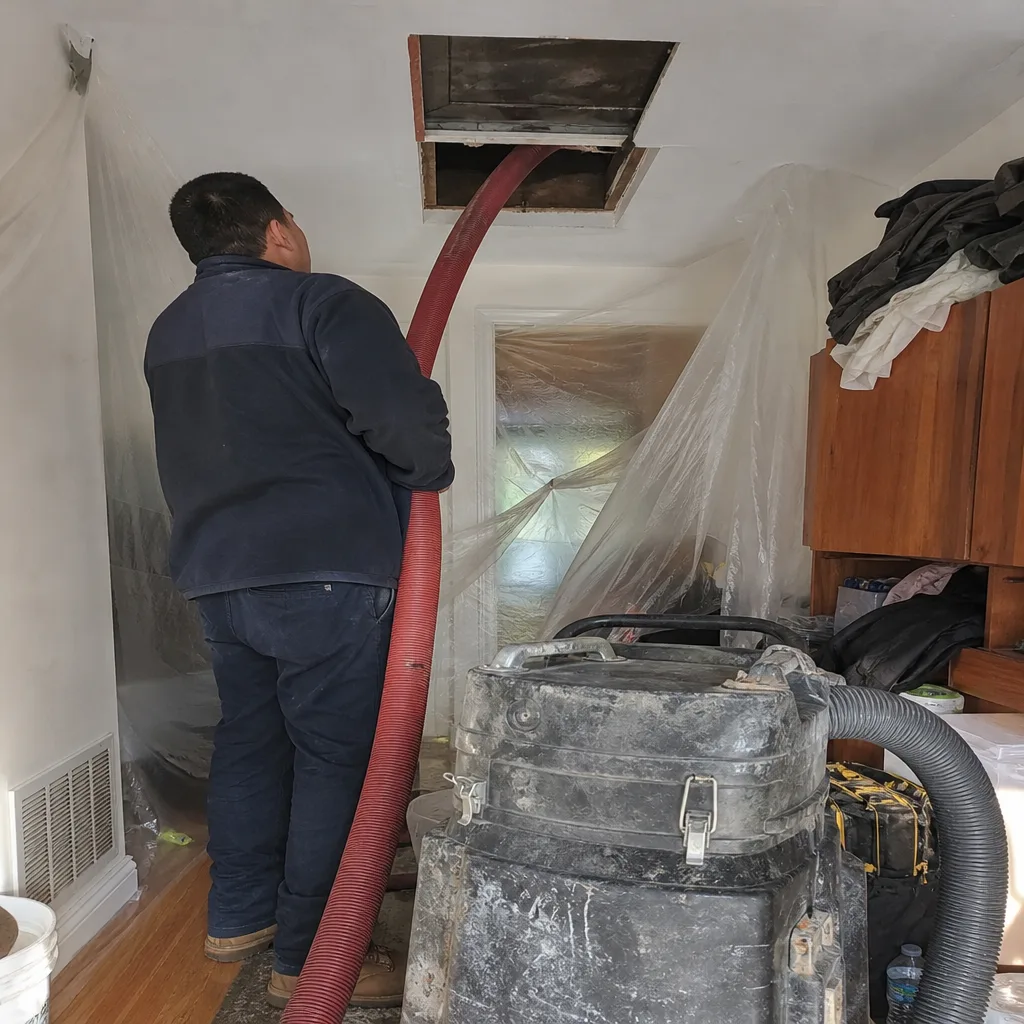 Before
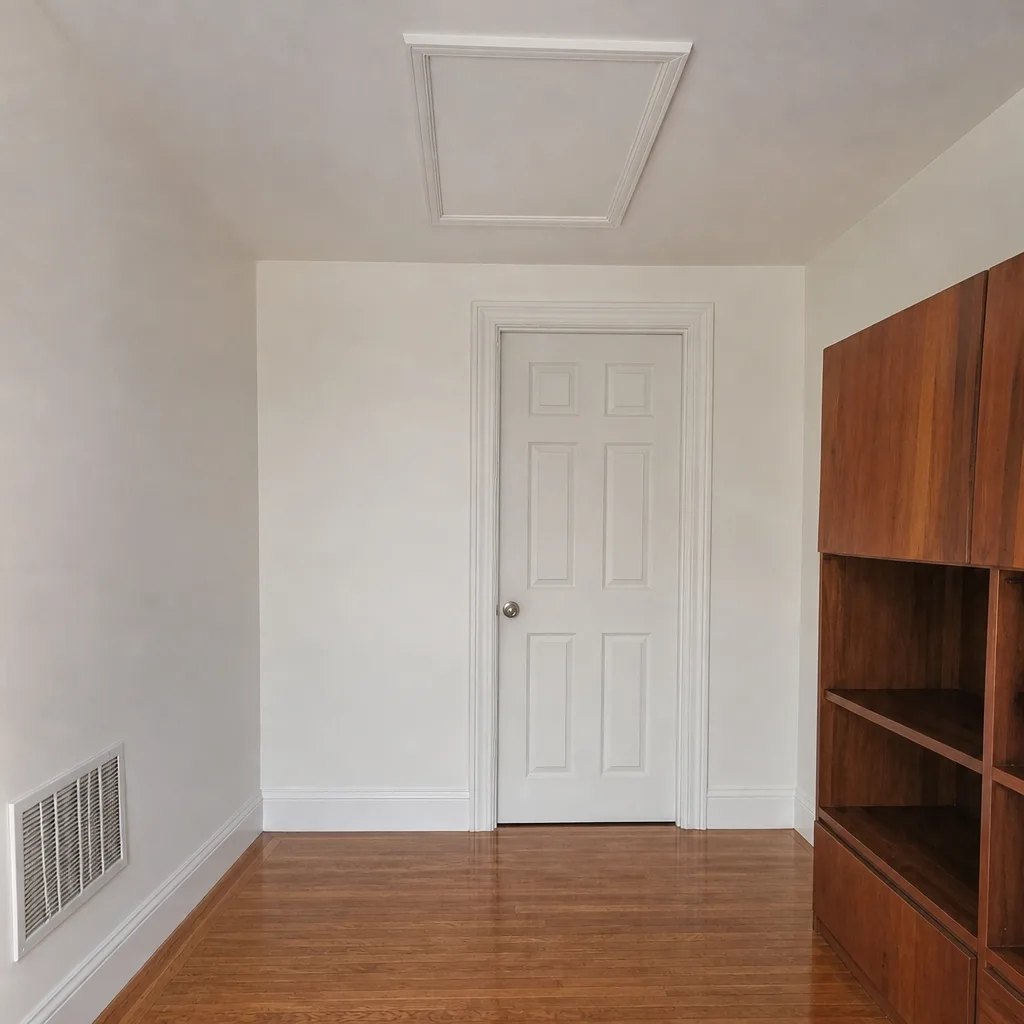 After
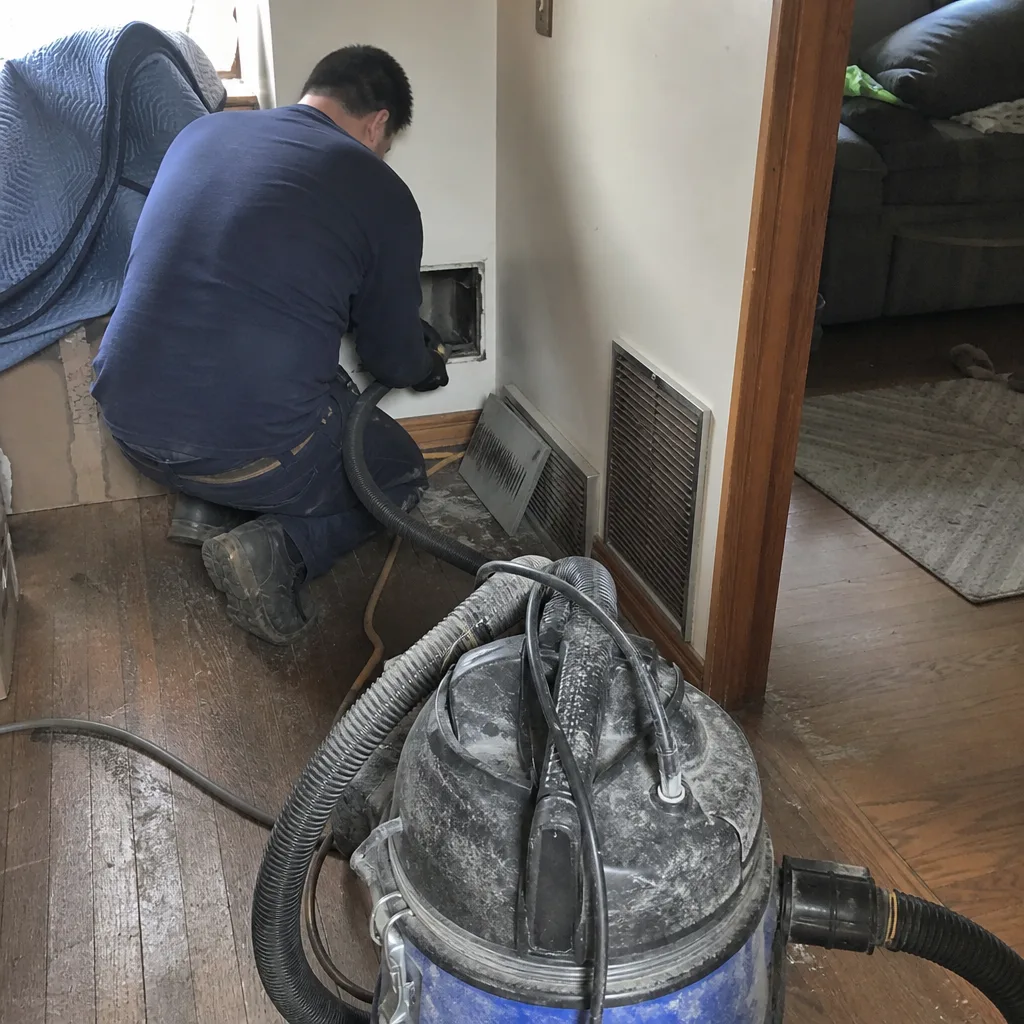 Before
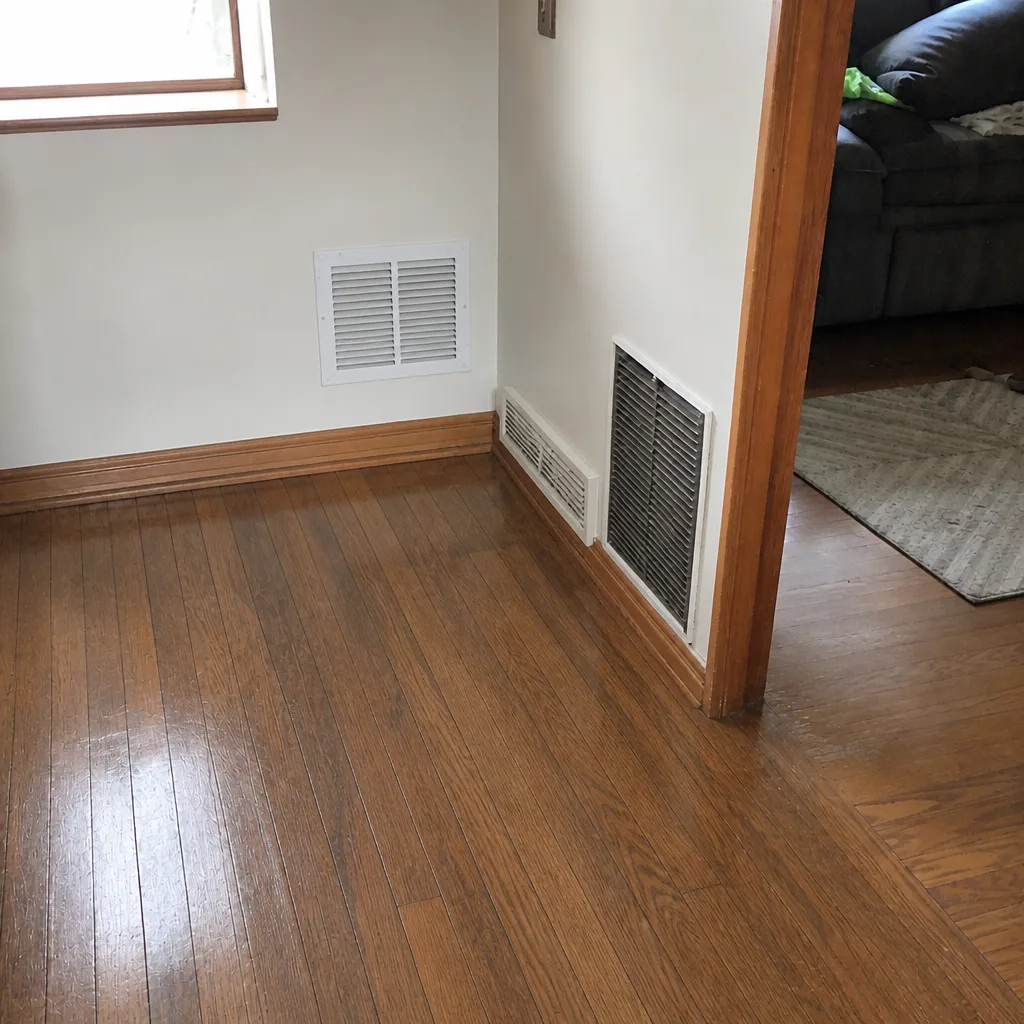 After
When to Call a Professional
Some duct issues are obvious. Others aren’t. Call a professional when you notice visible dust blowing out of registers right after a previous cleaning, persistent musty odors when the system runs, or a visible moldy or damp patch inside a duct. Call when your building was constructed before 1980 and you don’t know whether the duct insulation has been assessed. Call after water damage, renovation, or a pest problem that reached the duct system. Call when the dryer takes two cycles to dry a load. Call if a co-op or condo board has raised the question and you need a documented answer.
Air Duct Cleaning Flushing offers free estimates in Flushing – call (833) 468-5745. We answer 24/7. Fast dispatch from 7am to 7pm, Sunday through Friday. We work with Rotobrush rotary brush systems and Nikro-powered cleaning rigs, deploy Abatement Technologies air scrubbers during service, and carry Honeywell and Aprilaire filtration products for clients who want to keep the system cleaner after we’ve left.
Frequently Asked Questions
No. Routine air duct cleaning in a Flushing home or apartment does not require a DOB permit. Permits come into play only when work crosses from cleaning into alteration – new duct runs, relocated registers, changes to the furnace plenum, or any modification affecting a gas appliance’s combustion air. Call (833) 468-5745 for an exact scope assessment.
Yes, it’s the prudent step, and in many cases it’s required. Pre-1980 duct insulation can contain asbestos, and the city requires an assessment before work disturbs suspect materials. The clearance document, an ACP-5, confirms no asbestos in the work area. Ask your contractor whether they’ve handled this in pre-1980 Flushing buildings before.
Cleaning removes buildup from ductwork in place. Alteration changes the system’s configuration – cutting, relocating, resizing, or modifying a plenum. Alteration may require a licensed contractor and, depending on scope, a filed application. If your quote includes any modification language, ask who’s licensed to perform that part. Call (833) 468-5745 for a scoping conversation.
No. A board can require insurance, notice, work hours, and containment protocols, but it cannot impose a municipal permit the city doesn’t issue. If a board asks for something beyond that, get the building’s written alteration agreement and have the conversation in writing.
We don’t quote a number here, because honest pricing depends on the specific system. What matters is that the written estimate sets the final price, per job, with no per-vent surprises. Ask for before and after photos of your own ducts as part of the scope. Call (833) 468-5745 for an exact quote – estimates are free.
Professional-grade rotary brush systems, high-powered negative-pressure extraction equipment, and air scrubbers with containment for dusty jobs. A shop vac and a promise won’t do. We name our tools – Rotobrush, Nikro, Abatement Technologies – because transparency is part of the job. Ask any contractor what equipment they’re bringing.
The Bottom Line
Duct cleaning in Flushing is maintenance, and maintenance doesn’t require a permit. But the moment a job touches a gas appliance’s plenum, modifies the system’s layout, or disturbs suspect insulation in a pre-1980 building, the rules tighten. Know the difference between cleaning and alteration. In a pre-1980 building, ask about asbestos assessment before booking. In a co-op or condo, get board approval in writing. Document what was cleaned. Ask for before and after photos. The equipment matters too – rotary brush systems, negative-pressure extraction, and containment are what separate a real cleaning from a vacuum pass. From the ducts to the dryer vent cleaning, one call covers your entire air system.
For a scoping conversation, call (833) 468-5745. We answer 24/7. Fast dispatch from 7am to 7pm, Sunday through Friday. Estimates are free, and the written estimate sets the final price. If your building is older and the question of asbestos comes up, ask us – it’s the kind of thing we’d rather talk about before the job than after.
Written by the team at Air Duct Cleaning Flushing.