
Emergency Air Duct Cleaning Near Me: What Flushing Homeowners Should Do First
If water or sewage has entered your duct system, running your HVAC to “dry it out” is the worst thing you can do. It aerosolizes the contamination and moves it to every room in the house. The right first move is to shut the system off, keep the fan off entirely, and get the situation documented before anyone touches a vacuum. Here’s the triage sequence we’d walk any Flushing homeowner through before they pick up the phone. And if you’d rather have a pro look at it than sort it out yourself, call (833) 468-5745.
Is this actually a duct emergency, or a normal cleaning?
Most calls we field in Flushing are routine cleanings – dusty supply registers, visible lint, a system that’s been running for years without attention. A genuine emergency is a shorter list, and it looks different. Before you book anything, decide which bucket you’re in, because the two jobs call for different equipment and different sequencing.
A true duct emergency generally means one of four things:
- Sewage or flood water made contact with the return air side, supply runs, or a basement air handler. Water in a closed duct doesn’t dry out on its own, and if it was Category 3 water, the contamination travels with the airflow.
- Fire or smoke damage pushed soot through the system. Smoke residue is acidic and sticks to duct interiors, coil fins, and blower wheels.
- Confirmed rodent activity – droppings or nesting material inside the ductwork, not just scratching in a wall.
- Visible mold growth at the registers or on duct surfaces, especially when there’s a musty smell that returns right after you clean it.
Anything else – light dust, pet hair on the return grille, a renovation that left drywall dust around the vents – is a scheduled cleaning, not an emergency. Knowing which one you have keeps you from paying remediation prices for a routine job in Flushing, and keeps you from letting a real problem get handled like a routine job.
What should you do first for each emergency type?
The first action differs depending on what got into your ductwork. Get this wrong and you can push contamination deeper into the system before a technician ever arrives.
Sewage or flood contact
Shut off the HVAC at the thermostat and at the breaker if you can reach it safely. Do not run the fan to “circulate air.” Do not vacuum the registers with a shop vac – that just sends particles airborne. Keep people and pets out of the affected rooms, and if the water is still present, call a water damage company first. Duct cleaning comes after the source is stopped and the structure is dry.
Fire and smoke damage
Keep the system off. Change the filter only after you’ve documented the existing one, because it’s useful evidence for insurance. Don’t run air purifiers that push air around the affected zone until you’ve spoken to a pro about containment.
Rodent activity
Don’t seal vents, don’t set traps inside ductwork, and don’t start the system. Rodent droppings carry real health risk when disturbed. This is one of those jobs where containing the area matters more than cleaning it fast.
Visible mold at registers
Stop using the system if the smell is strong in living spaces. Wipe nothing – you’ll spread spores. A small patch on a removable grille is not the same as mold inside insulated duct board or on the air handler’s interior. The second one needs a pro with proper containment.
Across every scenario in Flushing, the same rule applies: don’t run the system to “test” whether it’s better. You’re just redistributing whatever’s in there.
Why standard duct cleaning equipment isn’t enough for an emergency
Here’s where a lot of Flushing homeowners get burned. A regular duct cleaning call arrives with a truck-mounted vacuum and a rotary brush. That’s the right setup for a scheduled maintenance cleaning. It’s the wrong setup for sewage or mold, because the job isn’t just removing material – it’s keeping it from spreading through the house while you work.
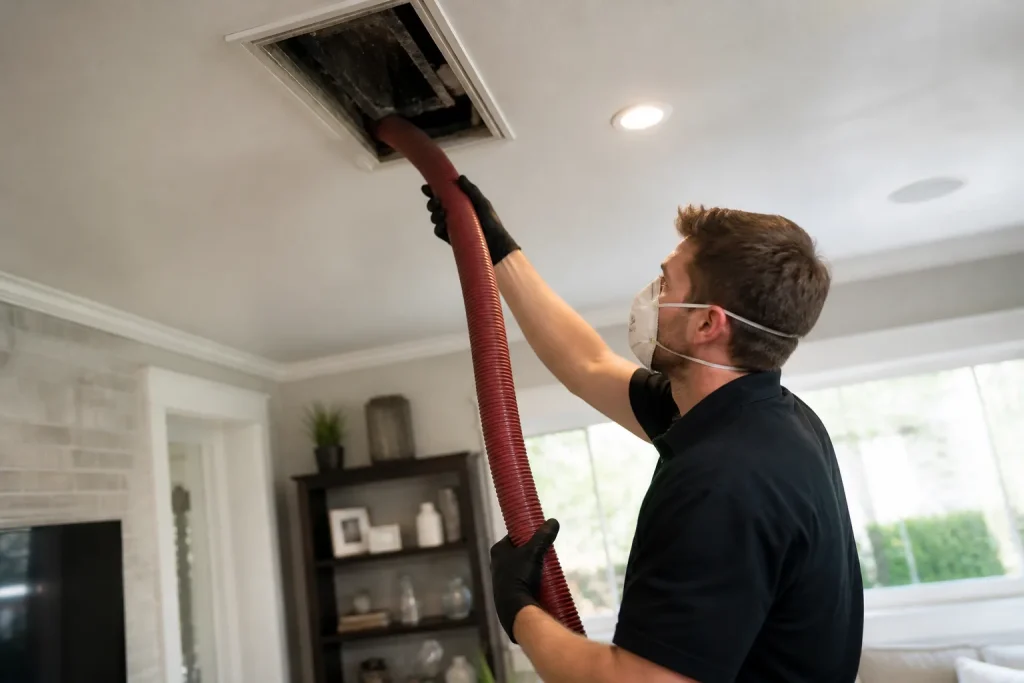
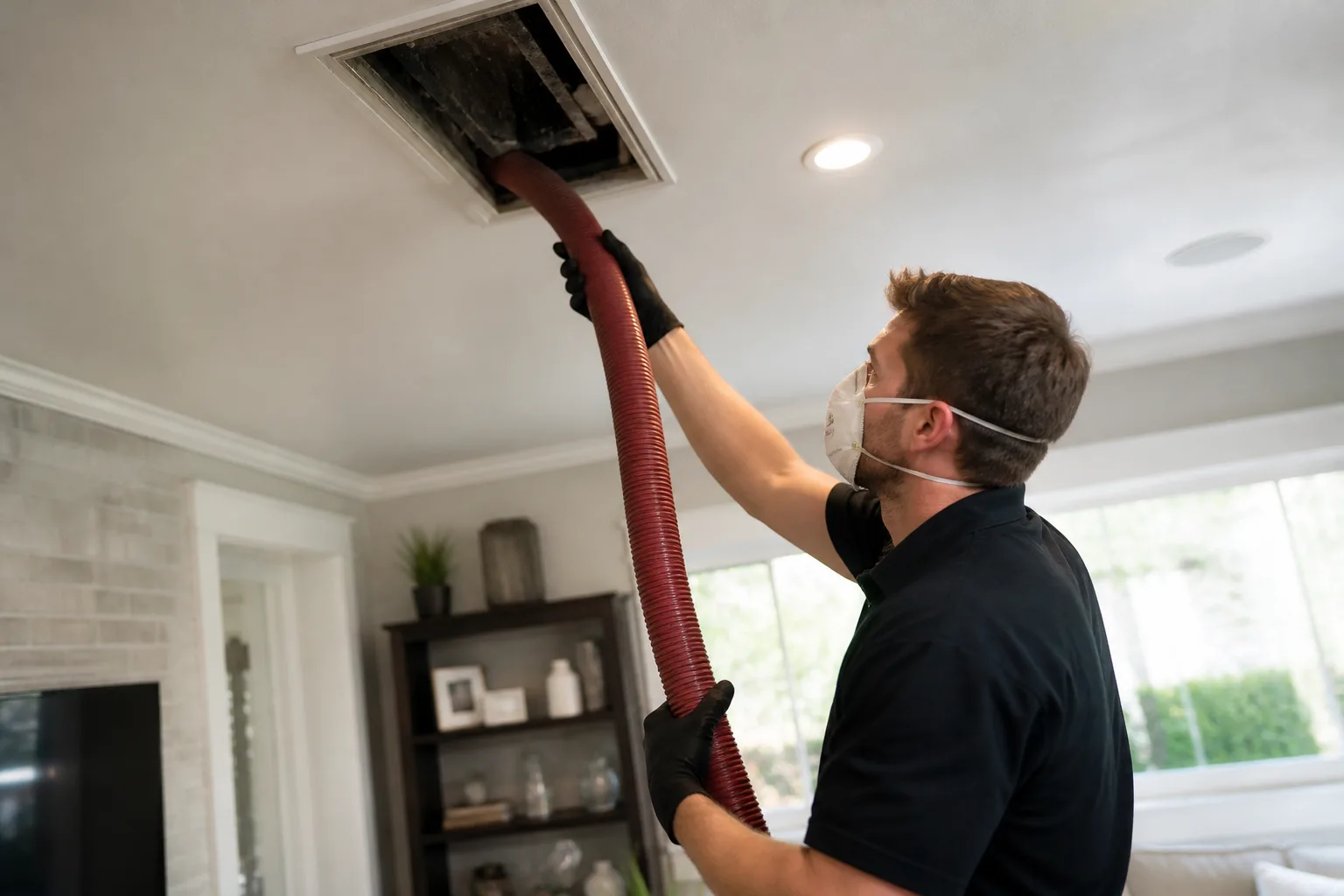
Containment is the difference. In a remediation-level response, we deploy Abatement Technologies air scrubbers to pull dislodged particulate out of the air and HEPA-filter it, with the work zone sealed off from the rest of the home. Rotobrush rotary systems and Nikro cleaning rigs handle the actual duct interior work, but the scrubbers are what make it safe to be in the same house while the job happens. On a standard cleaning, containment is a nicety. On an emergency call, it’s the whole ballgame.
If a company quotes you an emergency rate and their truck has nothing on board but a shop vac and a hose, that’s your signal. Ask what equipment they’re bringing. If they can name it, that’s a good sign. If they can’t, that’s your answer.
For standard scheduled work in Flushing, we’ve laid out the process on our air duct cleaning page. Emergency calls get a different containment protocol, but the underlying equipment stack is the same.
How do you document a duct emergency for insurance?
Do this before any cleaning begins. Once a technician starts pulling material out of the system, the evidence is gone, and insurance claims on duct damage get contested fast when there’s no proof of the original condition.
- Photograph everything before anyone touches it. Wide shots of each affected room, close-ups of registers showing staining, standing water, soot, or growth, and a shot of the air handler and filter in place.
- Timestamp your discovery. Most phones stamp photos automatically – make sure that’s on. Write down the date and time you first noticed the problem and what you were doing when you found it.
- Write a plain description. Two or three sentences is enough: what happened, when, which areas are affected. Keep it factual. “Noticed sewage smell from the return in the basement on the morning of [date]” is the kind of note an adjuster can work with.
- Photograph anything you removed. The old filter, a wet piece of duct insulation, a grille you pulled off to look – lay it out, shoot it, keep it in a bag if the adjuster might want to see it.
- Save the written estimate. A contractor’s line-item estimate showing what’s being cleaned and why supports your claim far better than a verbal number.
One thing worth knowing about Flushing: many of the homes here are older, and original duct systems may already have been modified over the years. A written description plus photos showing what was actually there protects you if an adjuster questions whether prior damage existed. For the smoke-and-soot side of the equation, our HVAC cleaning page explains what gets cleaned beyond the ducts themselves.
Duct cleaning or remediation? When you need an environmental cert
This is a distinction that trips up a lot of Flushing homeowners, and it’s worth getting straight before you call anyone.
A duct cleaning company cleans. It removes accumulated debris from a system that’s functioning normally. A remediation contractor handles contamination that poses a health risk to occupants – mold growth beyond a small patch, sewage contamination, fire residue with corrosive soot, or confirmed rodent infestation with droppings present. Those are different scopes of work, and in New York, mold remediation above a certain threshold typically requires an independent assessor and, in many cases, a written remediation protocol before work begins.
Our rule of thumb: if the issue is what’s in the air, that’s cleaning. If the issue is what grew there, ate there, or flowed there, that’s remediation. Many situations in Flushing sit on the line. If you’re unsure, ask the company directly whether your situation is in their scope. A straight answer tells you a lot. A vague one tells you more.
For the routine residential side of things, our air duct cleaning in Flushing overview covers the standard service. For the exhaust side of the system, dryer vent cleaning is a separate job with its own lint-load profile.
What does “emergency response” really mean in Flushing?
It means someone answers the phone now and books the fastest realistic dispatch. We answer 24/7. Fast dispatch from 7am to 7pm, Sunday through Friday. Closed Saturday. Same-day service is available when the schedule allows, and for a genuine containment situation we’ll tell you on the phone what the earliest open window actually looks like rather than overpromising.
Real talk: no company can promise “on-site in 15 minutes” for a job that requires a scrubber setup and containment. Those jobs get scheduled, not sprinted to. What you control in the interim:
- Keep the HVAC system off. Don’t run it to “see if it clears.”
- Close doors to the affected zone. Open windows only if outdoor air quality is better than indoor – which in Flushing depends on the day.
- Don’t run a standard household vacuum or a box fan in the contaminated area.
- Change your own furnace filter only with a mask and gloves, and photograph it first.
- If anyone in the home has asthma or allergies, plan to stay elsewhere until the containment work is complete.
If the situation involves sewage, standing water, or fire residue, call your insurance company at the same time you call us. Having both on the record from the start keeps the process cleaner.
When to call a pro: any time you can’t confidently say what got into your ducts. Call (833) 468-5745. We answer 24/7. Fast dispatch from 7am to 7pm, Sunday through Friday.
Related services in Flushing
If you’re sorting out your ductwork and want the rest of the system on the same visit, our HVAC cleaning and dryer vent cleaning services cover the coil, blower, and exhaust side of the same air system. Cleaner air isn’t a feeling – it’s a process, and ours is built around contractor-level equipment. Ask us what equipment we’re bringing and we’ll tell you exactly.
What happens when you call
- 1
A real person answersNo phone trees – you reach a local pro.
- 2
You get an upfront price rangeHonest numbers before anyone is dispatched.
- 3
A background-checked tech heads outLicensed & insured, dispatched right away.
- 4
You approve before work beginsNothing starts until you say go.
Frequently Asked Questions
No. Running the system distributes contamination through every room it serves. Shut it off at the thermostat and leave it off until a technician confirms the system is safe to operate. Call (833) 468-5745 for an exact scope – estimates are free.
It depends on how much mold is present and where it’s growing. A small patch on a grille is cleaning. Growth on duct board, insulation, or the air handler interior is remediation, and in New York that typically means an assessor and a written protocol. Call (833) 468-5745 and we’ll help you figure out which side of the line you’re on.
It depends on the cause. Sudden events like a burst pipe, fire, or sewage backup are more commonly covered than long-term neglect. Document the situation with photos and timestamps before cleaning starts, then call your insurer. Call (833) 468-5745 for a written estimate to submit with the claim.
Ask for before-and-after photos of your own ducts, not stock images, and ask what containment equipment was used. If a company can name their air scrubber and rotary brush system, that’s a real signal. Call (833) 468-5745 if you’d like to know exactly what we’ll bring to a Flushing job.
The Bottom Line
The main thing Flushing homeowners get wrong in a duct emergency is running the system. Turn it off, contain the area, document everything before anyone touches it, and be clear about whether you’re dealing with a cleaning or a remediation. Those two jobs need different crews and different equipment, and the wrong one makes things worse. If you’re in Flushing and need help sorting it out, Air Duct Cleaning Flushing offers free estimates – call (833) 468-5745. We answer 24/7. Fast dispatch from 7am to 7pm, Sunday through Friday.
One last note: hose your dryer vent while you’re thinking about your air system. Dryer lint doesn’t schedule an emergency, it just waits patiently for one.
Written by the team at Air Duct Cleaning Flushing.
Need Air Duct Cleaning Help?
Call Air Duct Cleaning Flushing - the local pro we connect you with is licensed and insured, here with fast help in Flushing.
(833) 468-5745